Meetings: the bane of many professionals’ existence, or a powerful tool for collaboration and progress? The answer often lies in how effectively they’re managed. This guide delves into four key strategies to transform unproductive meetings into efficient, results-oriented sessions, maximizing your team’s time and achieving tangible outcomes. We’ll explore how clear objectives, smart time management, active participation, and robust follow-up can revolutionize your meeting experience.
From crafting detailed agendas that align with broader goals to employing visual aids that enhance understanding and implementing effective methods for assigning and tracking action items, this guide provides practical, actionable steps to improve your meetings. We’ll also discuss strategies for managing diverse personalities and ensuring everyone feels heard and engaged, leading to a more collaborative and productive environment.
Setting Clear Objectives and Agendas
Effective meetings hinge on clear objectives and well-structured agendas. Without them, meetings can quickly devolve into unproductive discussions, wasting valuable time and resources. A well-defined agenda ensures everyone is on the same page, contributing meaningfully to achieving the meeting’s goals.
Establishing clear objectives before a meeting is crucial for ensuring focus and productivity. This involves aligning the meeting’s purpose with broader team or organizational goals, ensuring that the time spent is directly contributing to larger objectives. This process improves efficiency and accountability.
Sample Meeting Agenda with SMART Objectives
A well-structured agenda, incorporating SMART (Specific, Measurable, Achievable, Relevant, and Time-bound) objectives, provides a roadmap for productive meetings. Below is an example:
| Time | Topic | Presenter | Expected Outcome |
|---|---|---|---|
| 9:00 – 9:15 AM | Review Q3 Sales Performance | Sarah Jones (Sales Manager) | Identify top performing products and regions, pinpoint areas needing improvement, and establish targets for Q4. |
| 9:15 – 9:45 AM | Brainstorming New Marketing Campaign Ideas | Marketing Team | Develop at least three innovative marketing campaign concepts, outlining target audience, budget, and projected ROI. |
| 9:45 – 10:15 AM | Discuss and Prioritize New Campaign Ideas | Marketing Team & Sales Team | Select one prioritized marketing campaign for immediate implementation. |
| 10:15 – 10:30 AM | Action Items and Next Steps | All Attendees | Assign responsibilities for implementing the chosen marketing campaign and schedule a follow-up meeting to review progress. |
Agenda Distribution and Review Process
Distributing the agenda well in advance allows participants to prepare adequately. This preparation significantly improves the meeting’s efficiency. A clear process for distributing and reviewing the agenda ensures everyone understands their roles and responsibilities.
The agenda should be distributed at least 24 hours before the meeting, preferably via email. This email should include a brief summary of the meeting’s purpose and objectives, along with the detailed agenda. A request for feedback or questions should be included to encourage active participation and address any concerns beforehand. This proactive approach fosters a more productive meeting environment.
Establishing Clear Meeting Goals Aligned with Broader Objectives
Before scheduling a meeting, it’s essential to clearly define its goals. This involves connecting the meeting’s purpose to larger team or organizational objectives. For example, a meeting focused on improving customer satisfaction directly contributes to the overall goal of increased customer retention and revenue growth. By explicitly stating how the meeting’s outcome contributes to these larger goals, participants can better understand the meeting’s significance and actively participate. This approach ensures that the meeting isn’t just a standalone event, but a crucial step in achieving broader strategic objectives.
Effective Time Management and Participation

Effective meetings require a delicate balance: achieving all objectives within the allotted time while ensuring everyone contributes meaningfully. This involves proactive time management and fostering inclusive participation from all attendees, regardless of their communication styles. The following strategies can help cultivate a more productive and engaging meeting environment.
Efficient time management is crucial for productive meetings. Failing to adhere to a schedule can lead to rushed decisions, incomplete discussions, and overall dissatisfaction. Similarly, ensuring all voices are heard is essential for harnessing the collective intelligence of the group. Ignoring quieter members risks overlooking valuable insights, while unchecked dominance from certain individuals can stifle open dialogue.
Strategies for Effective Time Management
Implementing these strategies will help keep meetings focused and productive, ensuring that valuable time isn’t wasted.
- Set a strict time limit for each agenda item: Before the meeting, allocate specific time slots for each discussion point. This helps maintain focus and prevents any single topic from monopolizing the entire meeting.
- Use a timer: A visible timer serves as a constant reminder of the remaining time for each agenda item. This keeps the discussion on track and prevents it from running overtime.
- Establish clear decision-making processes: Knowing how decisions will be made (e.g., consensus, majority vote) helps streamline discussions and prevents unnecessary debate.
- Prepare materials in advance: Distribute relevant documents and presentations beforehand so the meeting can focus on discussion and decision-making rather than information dissemination.
- Stick to the agenda: While flexibility is important, it’s crucial to stay focused on the pre-defined agenda items. If a new topic arises, consider scheduling a separate meeting to discuss it adequately.
Methods for Encouraging Active Participation
Creating an inclusive environment where all voices are heard is paramount for effective meetings. These methods can help ensure everyone feels comfortable and empowered to contribute.
- Round-robin questioning: Going around the room and asking each participant for their input ensures everyone has a chance to speak, especially beneficial for engaging quieter members.
- Structured brainstorming techniques: Using techniques like brainwriting (writing ideas individually before sharing) can encourage participation from those who might be hesitant to speak up in a group setting.
- Positive reinforcement: Acknowledge and appreciate all contributions, even small ones. This creates a supportive atmosphere where everyone feels valued.
- Managing dominant personalities: Gently but firmly redirect dominant individuals, ensuring that others have an opportunity to share their thoughts. You might say, “Thank you, [Name], that’s a great point. Let’s hear from others now.”
- Anonymous feedback mechanisms: For sensitive topics, consider using anonymous feedback methods (e.g., a suggestion box or online survey) to encourage honest and open communication.
Using Visual Aids to Enhance Understanding and Engagement
Visual aids can significantly improve the clarity and memorability of information presented during meetings. They also help maintain attendee engagement and make the meeting more dynamic.
- Charts and graphs: Data presented visually, such as through bar charts, pie charts, or line graphs, is much easier to understand and interpret than raw numerical data. For example, a bar chart comparing sales figures across different quarters immediately highlights trends and performance.
- Flowcharts: Complex processes or workflows can be simplified and clarified using flowcharts. Each step is represented visually, making it easier to understand the sequence of events.
- Images and photographs: Relevant images or photographs can illustrate concepts and make presentations more engaging. For instance, showing a picture of a successful product launch can help convey the positive impact of a marketing strategy.
- Presentation slides with concise bullet points: Instead of lengthy paragraphs, use concise bullet points to highlight key information. Each slide should focus on a single idea or concept. This helps avoid information overload and keeps the audience focused.
- Whiteboards or flip charts: These can be used for brainstorming, mind-mapping, or visually documenting key decisions during the meeting. The collaborative nature of using these tools encourages participation.
Actionable Outcomes and Follow-Up
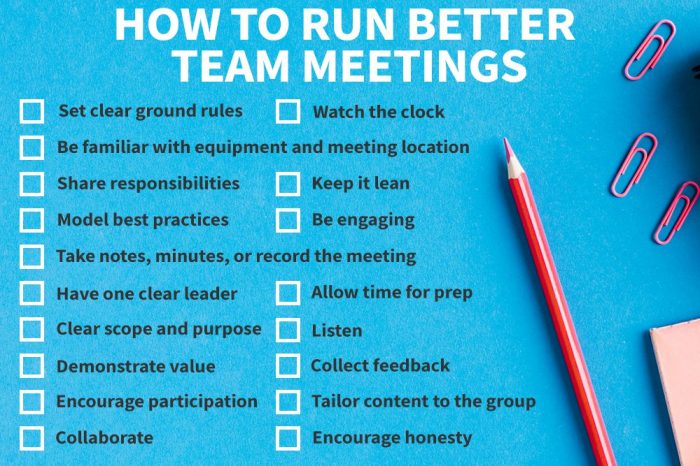
Productive meetings don’t just end with a discussion; they culminate in concrete actions and follow-up to ensure progress. Establishing a clear system for assigning tasks, documenting decisions, and tracking progress is crucial for translating meeting discussions into tangible results. This section Artikels strategies for achieving actionable outcomes and maintaining momentum after the meeting concludes.
Assigning Action Items and Setting Deadlines
A well-defined system for assigning action items is essential for accountability and progress tracking. During the meeting, clearly assign each action item to a specific individual, setting a realistic deadline for completion. Utilizing a table to record these assignments provides a clear, organized record for all participants. This visual representation minimizes confusion and ensures everyone understands their responsibilities.
| Action Item | Assignee | Deadline | Status |
|---|---|---|---|
| Draft project proposal | John Doe | October 27, 2023 | In Progress |
| Schedule client meeting | Jane Smith | October 26, 2023 | Complete |
| Review marketing materials | Peter Jones | October 28, 2023 | Pending |
Documenting Meeting Decisions and Distributing Minutes
Thorough documentation of meeting decisions is vital for maintaining clarity and consistency. Minutes should accurately reflect key discussions, decisions made, action items assigned, and any outstanding issues. To ensure efficient distribution, consider using a digital format (e.g., a shared document or email) rather than relying on paper copies. This allows for easy access and updates, fostering collaboration and transparency. Timely distribution of minutes within 24 hours is ideal to maintain momentum and avoid information silos.
Ensuring Follow-Up on Action Items
Several methods can ensure effective follow-up on action items. Email reminders can serve as a simple and effective way to prompt individuals about upcoming deadlines. However, for complex projects or multiple action items, project management tools offer more robust tracking and collaboration features. These tools often include features like task assignment, progress tracking, and automated notifications, enhancing accountability and facilitating efficient collaboration. Regular check-ins, whether through brief email exchanges or short scheduled meetings, provide opportunities to monitor progress, address roadblocks, and ensure tasks stay on track. Choosing the most appropriate method depends on the complexity of the project and the team’s preferences and workflow.
Concluding Remarks

By implementing these four strategies – setting clear objectives and agendas, managing time and participation effectively, focusing on actionable outcomes, and ensuring thorough follow-up – you can significantly enhance the productivity of your meetings. Transforming your meetings from time-wasting exercises into valuable opportunities for collaboration and progress requires commitment and planning, but the rewards – increased efficiency, improved team cohesion, and ultimately, better results – are well worth the effort. Embrace these techniques, and witness a noticeable shift in the effectiveness of your meetings.