Transforming your website into a sales powerhouse requires a strategic approach. This guide delves into ten proven methods to significantly increase conversions, covering website design, compelling content creation, and crucial technical optimizations. By understanding user experience, crafting persuasive copy, and ensuring technical excellence, you can unlock your website’s full sales potential and drive significant revenue growth.
We’ll explore practical strategies, from A/B testing different layouts to optimizing website speed and crafting effective calls to action. Each step is designed to enhance user engagement and guide visitors seamlessly toward making a purchase. Prepare to discover how seemingly small adjustments can yield substantial results in boosting your bottom line.
Website Design & User Experience for Conversions
Effective website design is paramount for driving conversions. A well-designed site not only presents your brand attractively but also guides users seamlessly towards desired actions, ultimately boosting sales. This involves careful consideration of layout, navigation, visual hierarchy, and continuous optimization through A/B testing.
Website Layout and Calls to Action
A website’s layout significantly impacts conversion rates. The placement and prominence of calls to action (CTAs) are crucial. Consider these three layouts and their relative strengths and weaknesses:
| Layout | Strengths | Weaknesses |
|---|---|---|
| Single-column layout with prominent CTA at the bottom | Simple, easy to navigate; CTA is clearly visible after content consumption. | May lead to lower conversion rates if users don’t scroll to the bottom; less engaging for visually-driven users. |
| Multi-column layout with CTAs strategically placed throughout | Provides multiple opportunities for conversion; caters to different user scrolling behaviors. | Can be overwhelming if not designed carefully; may distract from main content if CTAs are too intrusive. |
| Hero image layout with prominent CTA above the fold | Immediately grabs attention; high impact for first impressions; ideal for concise messaging. | May not be suitable for all types of content; can feel intrusive if the CTA is too large or aggressive. |
Effective Website Navigation
Clear and intuitive navigation is essential for guiding users through your website. Effective navigation prevents user frustration and ensures they easily find the information they need, increasing the likelihood of conversion. Examples include a clear menu bar with easily understandable labels, breadcrumbs to show users their location within the site, and prominent search functionality. A well-structured sitemap is also beneficial for both users and search engines.
Visual Hierarchy and User Engagement
Visual hierarchy dictates the order in which users perceive information on a webpage. Elements with higher visual importance (e.g., larger text, brighter colors, prominent placement) are noticed first. Effective visual hierarchy guides the user’s eye towards key information, including CTAs, improving engagement and conversion rates. For example, using larger font sizes for headlines, strategic use of whitespace, and consistent visual cues (e.g., using color to highlight important sections) helps establish a clear visual hierarchy.
A/B Testing Website Designs
A/B testing allows for data-driven optimization of website design. It involves creating two versions (A and B) of a webpage, each with a slightly different design element, and showing them to different segments of users. By tracking conversion rates for each version, you can determine which design performs better.
- Identify a Key Metric: Define the primary metric you want to improve (e.g., conversion rate, click-through rate).
- Choose a Variable to Test: Select a specific design element to test (e.g., CTA button color, headline text, image placement).
- Create Two Versions: Design two versions of your webpage, identical except for the chosen variable.
- Run the Test: Use A/B testing software to show each version to different groups of users. Ensure statistically significant sample sizes for reliable results.
- Analyze Results: After sufficient data collection, analyze the results to determine which version performed better based on your chosen metric.
- Implement Changes: Based on the results, implement the winning design or further iterate with new tests.
Content Optimization for Higher Sales
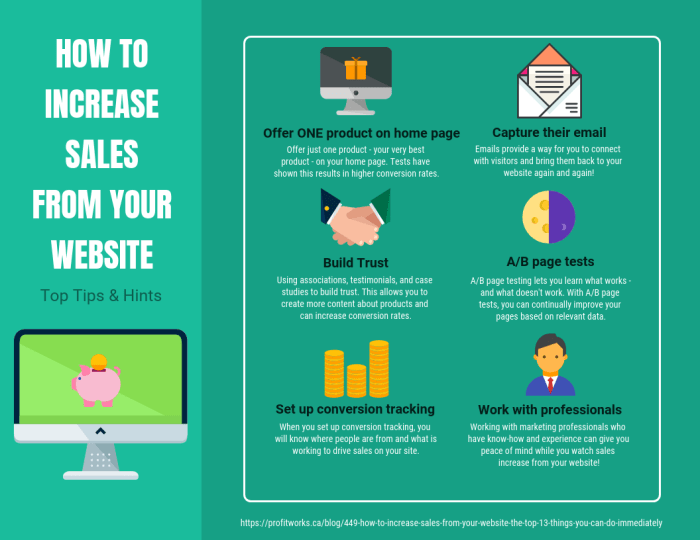
Effective website content is crucial for driving conversions and boosting sales. It’s not just about having information; it’s about crafting compelling narratives that resonate with your target audience, clearly communicate your value proposition, and ultimately persuade them to take action. This involves a strategic approach to copywriting, product descriptions, and calls to action.
High-performing websites utilize content to build trust, establish credibility, and guide users through the sales funnel seamlessly. By focusing on the customer’s needs and desires, businesses can create content that not only informs but also inspires action.
Compelling Website Copy Examples
Successful website copy often employs storytelling techniques to connect with the reader on an emotional level. It avoids generic language and focuses on specific benefits that address the customer’s pain points. For example, a software company might not simply say “Our software is efficient.” Instead, they might say, “Stop wasting hours on tedious tasks. Our software automates your workflow, freeing up your time to focus on what matters most – growing your business.” This speaks directly to the user’s desire for efficiency and time savings.
Another example is a clothing retailer that might feature a customer testimonial alongside a product image. Instead of just saying “Our shirts are comfortable,” they might include a quote like, “I’ve never owned a shirt this comfortable! It’s perfect for both work and weekends.” This adds social proof and builds trust.
Designing Engaging Website Content
Engaging website content requires a clear understanding of your target audience and their needs. It’s essential to speak their language, address their concerns, and provide valuable information that helps them make informed decisions. Using strong visuals, such as high-quality images and videos, can also significantly enhance engagement. Think about incorporating interactive elements like quizzes or calculators to further enhance user experience and keep visitors engaged.
Consider a website selling organic coffee. Instead of simply listing the product’s origin, the content could describe the sustainable farming practices, the unique flavor notes, and the positive impact on the local community. This paints a vivid picture and appeals to customers who value ethical and sustainable products.
Creating High-Quality Product Descriptions
High-quality product descriptions are more than just a list of features; they tell a story and highlight the benefits. They should address the customer’s needs and desires, emphasizing how the product solves their problems or improves their lives. Using strong verbs and sensory language can make descriptions more engaging and memorable.
For instance, instead of writing “This is a durable backpack,” a better description would be: “Conquer your daily commute with this rugged, water-resistant backpack. Its reinforced stitching and padded straps ensure comfort, while multiple compartments keep your belongings organized and secure.” This description paints a picture of the backpack’s functionality and durability, appealing to the customer’s need for a practical and reliable product.
Best Practices for Writing Effective Calls to Action (CTAs)
Effective CTAs are crucial for guiding visitors towards conversion. They should be clear, concise, and compelling, using strong action verbs that encourage immediate action. Placement is also vital; CTAs should be strategically placed throughout the website, where users are most likely to see and click them.
Examples of effective CTAs include “Shop Now,” “Learn More,” “Get a Free Quote,” or “Download Your Free Guide.” Using a sense of urgency, such as “Limited Time Offer” or “Order Now Before They’re Gone,” can further increase click-through rates. Furthermore, A/B testing different CTA buttons and wording can help identify what resonates most with your audience and optimize for maximum effectiveness. Testing different colors, sizes, and placement can also significantly impact conversion rates.
Technical and Performance Improvements
Technical and website performance are crucial for a positive user experience and ultimately, higher conversion rates. A technically sound website ensures search engines can easily crawl and index your pages, while fast loading speeds keep visitors engaged and encourage them to explore your offerings. Ignoring these aspects can lead to lost opportunities and a diminished return on investment.
Common Website Technical Issues Hindering Conversions
Addressing technical issues is paramount for optimizing your website for conversions. Three common problems frequently hinder user experience and lead to decreased sales. Solving these problems can significantly improve your site’s performance and attract more customers.
- Slow Page Load Speed: Slow loading times frustrate users and lead to high bounce rates. This is detrimental to conversion rates as visitors are less likely to complete a purchase or fill out a form if the site takes too long to load.
- Solutions: Optimize images, leverage browser caching, minimize HTTP requests, use a content delivery network (CDN), and choose a fast web hosting provider.
- Mobile Friendliness Issues: A significant portion of website traffic comes from mobile devices. If your website isn’t responsive and mobile-friendly, users will have a difficult time navigating, leading to frustration and abandonment.
- Solutions: Ensure your website is responsive using a mobile-first approach or responsive design techniques. Test your site’s responsiveness across various devices and screen sizes using tools like Google’s Mobile-Friendly Test.
- Broken Links and Crawl Errors: Broken links and crawl errors disrupt user navigation and signal to search engines that your website is poorly maintained. This negatively impacts search engine rankings and accessibility, reducing the likelihood of potential customers finding your site.
- Solutions: Regularly check for broken links using tools like Screaming Frog Spider or Google Search Console. Submit sitemaps to search engines and fix any identified errors promptly.
Website Speed’s Impact on Conversion Rates
Website speed is directly correlated with conversion rates. Studies have consistently shown that even a slight delay in loading time can significantly impact conversions. For example, a one-second delay in page load time can result in a 7% reduction in conversions. Amazon, for instance, found that a 100-millisecond improvement in page load time resulted in a 1% increase in sales.
- Tools for Measuring and Improving Site Performance: Several tools are available to measure and improve website speed. Google PageSpeed Insights provides detailed reports on your site’s performance and suggests optimization strategies. GTmetrix offers similar functionality, providing in-depth analysis and recommendations. WebPageTest offers a more comprehensive analysis, allowing for testing from various geographic locations.
Technical Best Practices for Improved Conversions
Implementing technical best practices ensures search engines can easily crawl and index your website, leading to improved visibility and higher conversion rates. A well-structured and technically optimized website increases user engagement and satisfaction.
- XML Sitemap Submission: Submitting an XML sitemap to search engines helps them discover and index your pages efficiently.
- Robots.txt Optimization: Properly configuring your robots.txt file ensures search engines crawl the appropriate pages and avoid indexing unwanted content.
- Structured Data Markup (Schema): Implementing schema markup helps search engines understand your content better, leading to richer search results and improved click-through rates.
- HTTPS Implementation: Using HTTPS ensures secure connections and improves user trust, potentially boosting conversions.
- Mobile Optimization: Ensure your website is responsive and provides a seamless experience across all devices.
- Canonicalization: Use canonical tags to avoid duplicate content issues and consolidate search engine rankings.
- Regular Security Audits: Conduct regular security audits to identify and address vulnerabilities that could compromise your website and user data.
Comparison of Website Hosting Options for Conversion Optimization
Different website hosting options offer varying levels of performance and features that can impact conversion optimization.
- Shared Hosting: Generally the most affordable option, shared hosting can be slow and unreliable due to resource limitations, potentially impacting conversion rates. Performance can suffer if other websites on the same server experience high traffic.
- VPS Hosting: Provides more resources and control than shared hosting, leading to better performance and reliability. It’s a good balance between cost and performance for growing businesses.
- Dedicated Hosting: Offers the highest level of performance and control, as you have exclusive access to the server’s resources. This is ideal for high-traffic websites where speed and stability are paramount. However, it’s the most expensive option.
- Cloud Hosting: Offers scalability and flexibility, adjusting resources based on demand. This is ideal for websites with fluctuating traffic, ensuring optimal performance regardless of load.
Last Point
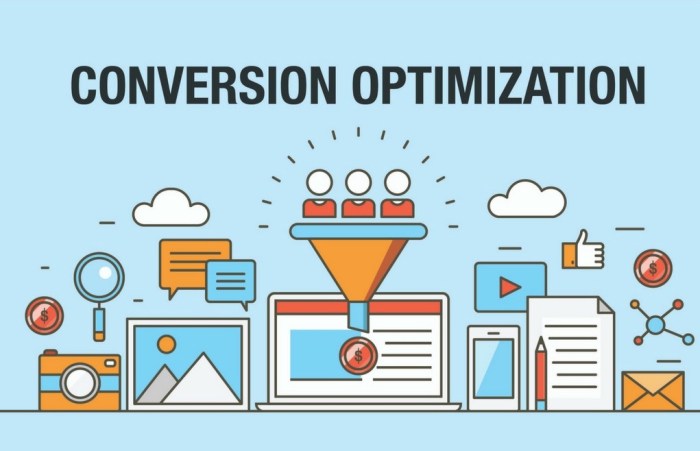
Optimizing your website for conversions is an ongoing process, requiring continuous monitoring and adaptation. By implementing the strategies Artikeld in this guide – from enhancing website design and content to improving technical and performance – you’ll create a more engaging and effective online presence. Remember that consistent A/B testing and data analysis are key to refining your approach and maximizing your return on investment. Embrace the iterative nature of optimization and watch your sales figures climb.