Boosting your return on investment (ROI) from paid advertising campaigns requires a strategic approach. This guide delves into nine key strategies to help you maximize your advertising spend and achieve significant results. We’ll explore audience targeting, ad creative optimization, landing page design, budget allocation, and bidding strategies – all crucial elements for a successful paid advertising campaign.
Understanding your target audience is paramount. We’ll cover defining your ideal customer profile and setting measurable goals with key performance indicators (KPIs). This includes exploring different audience targeting methods and crafting compelling ad creatives and high-converting landing pages to effectively reach and engage your desired audience. Finally, we’ll examine effective budget allocation and bidding strategies to optimize your campaign performance and achieve a higher ROI.
Understanding Your Audience and Campaign Goals
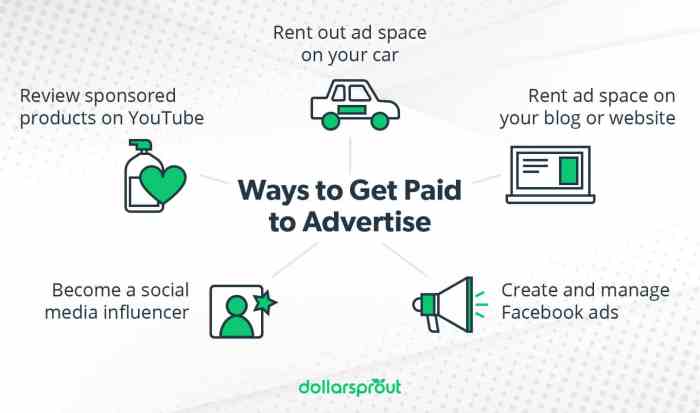
Effective paid advertising hinges on a clear understanding of your target audience and the specific objectives you aim to achieve. Without this foundational knowledge, your campaigns risk wasting valuable resources and failing to deliver a satisfactory return on investment. This section will delve into defining your ideal customer profile and setting measurable campaign goals.
Before launching any paid advertising campaign, it’s crucial to develop a detailed understanding of your ideal customer profile (ICP). This involves identifying the specific demographics, psychographics, behaviors, and needs of your most valuable customers. Consider factors such as age, location, income, occupation, interests, online behavior, and pain points. A well-defined ICP allows for precise targeting, ensuring your ads reach the individuals most likely to convert.
Ideal Customer Profile for Paid Advertising
The ideal customer profile goes beyond basic demographics. It paints a holistic picture of your best customer. For example, imagine you’re selling premium organic coffee. Your ICP might be professionals aged 25-45, living in urban areas with a high disposable income, who value sustainability and ethical sourcing. They are likely to be active on social media platforms like Instagram and consume content related to healthy living and gourmet food. Understanding their daily routines, online habits, and motivations will inform your ad creative and placement strategy.
Campaign Goals and Key Performance Indicators (KPIs)
Establishing clear and measurable campaign goals is paramount for success. These goals should align with your overall business objectives and provide a framework for evaluating campaign performance. The chosen KPIs will directly reflect the chosen goals.
Here are three distinct campaign goals with their corresponding KPIs:
- Goal: Increase Brand Awareness. KPIs: Website visits, social media engagement (likes, shares, comments), reach, impressions, brand mentions.
- Goal: Drive Website Conversions (e.g., sales, lead generation). KPIs: Conversion rate, cost per acquisition (CPA), return on ad spend (ROAS), click-through rate (CTR).
- Goal: Improve Customer Retention. KPIs: Customer lifetime value (CLTV), repeat purchase rate, customer churn rate, email open and click-through rates (for retargeting campaigns).
Audience Targeting Methods
Several methods exist for targeting your audience. Each has strengths and weaknesses, influencing the cost-effectiveness and precision of your campaigns.
| Targeting Method | Description | Advantages | Disadvantages |
|---|---|---|---|
| Demographic | Targeting based on age, gender, location, income, education, etc. | Wide reach, relatively easy to implement, readily available data. | Can be broad, may not accurately reflect individual preferences or behaviors. |
| Behavioral | Targeting based on past online behavior, such as website visits, purchase history, app usage, etc. | Highly targeted, increased relevance, improved conversion rates. | Requires data collection and analysis, potential privacy concerns. |
| Contextual | Targeting based on the content of websites or apps where ads are displayed. | Highly relevant ads, increased engagement, improved brand perception. | Limited targeting options, potential for irrelevant ad placements if not carefully managed. |
| Custom Audience (Remarketing) | Targeting users who have previously interacted with your brand (website visits, email subscribers, etc.). | High conversion rates, cost-effective, allows for personalized messaging. | Requires existing data, may require specific platform setup. |
Optimizing Your Ad Creatives and Landing Pages
Creating compelling ad creatives and high-converting landing pages is crucial for maximizing your paid advertising ROI. A well-designed ad grabs attention and drives clicks, while a perfectly aligned landing page converts those clicks into valuable actions. The synergy between these two elements is paramount for success.
Compelling Ad Creative Variations
Effective ad creatives highlight the unique benefits your product or service offers. To test which resonates most with your audience, create variations emphasizing different key selling points. Below are three examples focusing on different benefit statements for a hypothetical productivity app:
- Ad Creative 1 (Focus: Time Saving): Image: A person smiling while working efficiently on a laptop. Text: “Reclaim Your Time! Get more done in less time with our productivity app. Start your free trial today!”
- Ad Creative 2 (Focus: Stress Reduction): Image: A serene scene, perhaps a beach or mountains. Text: “Reduce Stress, Boost Productivity. Our app simplifies your workflow, leaving you feeling calm and accomplished. Download now!”
- Ad Creative 3 (Focus: Increased Efficiency): Image: A chart showing a significant upward trend. Text: “Maximize Your Output! Our data-driven app optimizes your tasks, leading to significant efficiency gains. Try it free for 14 days!”
Strong Calls to Action (CTAs) for Different Campaign Objectives
The call to action (CTA) is the pivotal element that guides users towards desired actions. The most effective CTAs are concise, compelling, and directly related to the campaign goal.
- Campaign Objective: Lead Generation: CTA Examples: “Download Your Free Guide,” “Request a Demo,” “Sign Up for a Webinar.”
- Campaign Objective: Sales: CTA Examples: “Shop Now,” “Buy Now,” “Get Your Discount,” “Add to Cart.”
- Campaign Objective: App Downloads: CTA Examples: “Download Now,” “Get the App,” “Install Now.”
A/B Testing Ad Creatives and Landing Pages
A/B testing is a crucial process for optimizing your campaigns. It involves creating two versions of an ad creative or landing page (A and B), showing them to different segments of your audience, and analyzing which performs better based on key metrics. This iterative process allows for continuous improvement.
The process typically involves:
- Hypothesis Formulation: Define a specific hypothesis you want to test (e.g., “A headline with a benefit statement will outperform a headline with a feature statement”).
- Version Creation: Create two versions of your ad or landing page, differing only in the element you’re testing.
- Audience Segmentation: Divide your target audience into two groups, ensuring equal representation.
- Data Collection: Run the test for a sufficient duration, collecting data on key metrics (see below).
- Analysis & Iteration: Analyze the results. The version with better performance becomes the new standard, and the process repeats with new variations.
Key Metrics to Track: Click-Through Rate (CTR), Conversion Rate, Cost Per Acquisition (CPA), Return on Ad Spend (ROAS).
Best Practices for High-Converting Landing Pages
High-converting landing pages share several key characteristics. They are:
- Clearly Defined Value Proposition: Immediately communicate the benefit of your product or service.
- Strong Visual Hierarchy: Guide the user’s eye to the most important elements (headline, CTA).
- Concise and Compelling Copy: Use clear, concise language that highlights key benefits.
- Prominent Call to Action: Make the CTA easily visible and compelling.
- Mobile Responsiveness: Ensure the landing page displays correctly on all devices.
- Fast Loading Speed: A slow-loading page leads to high bounce rates.
- Alignment with Ad Creatives: The landing page should reinforce the message and promise made in the ad.
Budget Allocation and Bidding Strategies
Effective budget allocation and strategic bidding are crucial for maximizing your return on investment (ROI) in paid advertising. A well-defined strategy ensures your resources are used efficiently, targeting the most promising opportunities and minimizing wasted spend. This section will guide you through the process of optimizing your budget and selecting the right bidding approach.
Budget allocation involves distributing your overall advertising budget across different campaigns and channels. This requires a thorough understanding of your target audience, their online behavior, and the relative effectiveness of various platforms. A poorly allocated budget can lead to underperforming campaigns and missed opportunities. Consider factors such as audience reach, conversion rates, and cost-per-acquisition (CPA) when making allocation decisions.
Effective Budget Allocation Across Campaigns and Channels
Prioritize campaigns based on their potential ROI. For instance, if you find that your Google Search campaigns consistently deliver higher conversion rates than your social media campaigns, allocate a larger portion of your budget to Google Search. Regularly analyze campaign performance data to identify high-performing and underperforming campaigns. Shift budget from underperforming campaigns to those demonstrating stronger results. A dynamic approach allows you to optimize your spend in real-time. Consider using a tiered approach, allocating a larger budget to proven high-performing campaigns while allocating a smaller budget to test new campaigns or channels. This balances risk and reward. For example, 70% of the budget could be allocated to proven high-performing campaigns, 20% to campaigns with promising early results, and 10% to testing new channels or campaigns.
Comparison of Bidding Strategies
Several bidding strategies exist, each with its own advantages and disadvantages. Automated bidding strategies utilize machine learning to optimize bids automatically, often leading to increased efficiency. Manual bidding, on the other hand, offers greater control but requires more time and expertise. Cost-per-click (CPC) bidding is a common strategy where you pay only when a user clicks on your ad. Other strategies include cost-per-thousand impressions (CPM), where you pay per 1,000 ad impressions, and cost-per-acquisition (CPA), where you pay only when a specific action (e.g., purchase) occurs. The choice of bidding strategy depends on your specific goals and resources. For example, a business focused on brand awareness might opt for CPM bidding, while a business focused on sales might prefer CPA bidding.
Step-by-Step Guide to Setting Up and Monitoring a Paid Advertising Budget
- Define your overall marketing budget: Determine how much you can realistically allocate to paid advertising.
- Set campaign-specific budgets: Allocate your budget across different campaigns based on their potential ROI and strategic importance.
- Choose a bidding strategy: Select a bidding strategy that aligns with your campaign goals and resources (automated, manual, CPC, CPM, CPA, etc.).
- Implement and monitor: Launch your campaigns and regularly track their performance using relevant metrics (clicks, impressions, conversions, CPA, etc.).
- Adjust your budget and bidding strategies: Based on the performance data, adjust your budget allocation and bidding strategies to optimize your ROI. For example, if a campaign is consistently underperforming, reduce its budget or switch to a more aggressive bidding strategy.
Adjusting Bidding Strategies Based on Campaign Performance Data
Regularly review campaign performance data, paying close attention to key metrics such as click-through rate (CTR), conversion rate, and cost-per-acquisition (CPA). If a campaign’s CTR is low, consider adjusting your s, ad copy, or targeting options. If the conversion rate is low, analyze your landing page and user experience to identify areas for improvement. If your CPA is higher than your target, you might need to adjust your bidding strategy to become more conservative. For example, you could lower your bids or refine your targeting to reach a more qualified audience. Conversely, if a campaign is performing exceptionally well, consider increasing your budget to capitalize on its success. This iterative process of monitoring, analyzing, and adjusting is crucial for maximizing your ROI.
Closing Summary
By implementing these nine tips, you can significantly improve the efficiency and effectiveness of your paid advertising campaigns. Remember that continuous monitoring, analysis, and adaptation are essential for long-term success. Don’t hesitate to experiment with different approaches and track your results meticulously to refine your strategies and consistently maximize your return on investment. A data-driven approach, combined with creative ad copy and strategic targeting, will set you on the path to achieving remarkable results with your paid advertising.