Mastering social media requires more than just posting; it demands a strategic approach to content creation and optimization. This guide delves into the art of crafting engaging social media content, focusing on five key post types that will captivate your audience and drive meaningful results. We’ll explore how to identify your target audience, craft compelling visuals and captions, leverage different content formats, and analyze your performance to continuously improve your strategy.
From understanding the nuances of each platform to mastering the art of short-form video and leveraging analytics, we’ll equip you with the knowledge and tools to transform your social media presence. Learn how to create a content calendar, optimize posting times, and measure your success using key performance indicators (KPIs). This comprehensive guide will help you elevate your social media game and achieve your marketing objectives.
Identifying Your Target Audience & Platform Strategy
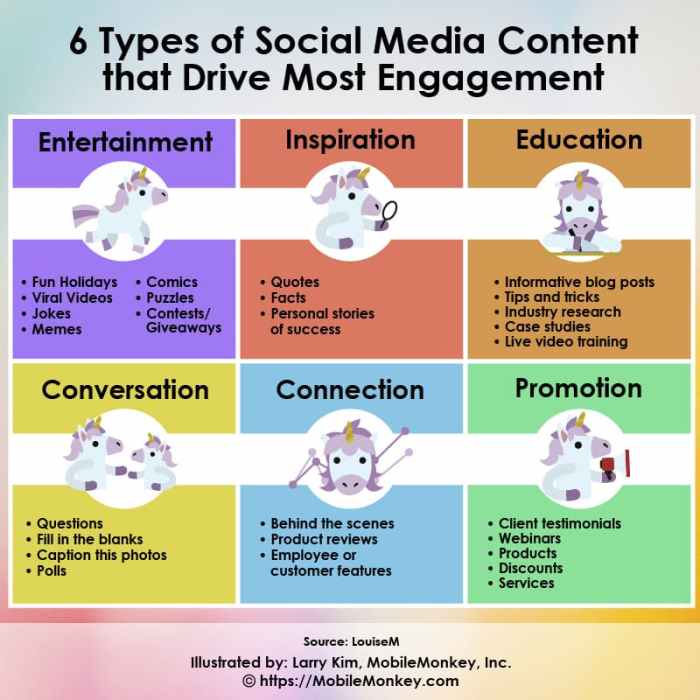
Effective social media marketing hinges on understanding your audience and tailoring your strategy to the specific platform. A one-size-fits-all approach rarely works; different platforms attract different demographics and necessitate distinct content styles. By clearly defining your target audience and developing a platform-specific strategy, you can maximize your reach and engagement.
Understanding your target audience involves more than just demographics. It’s about understanding their needs, pain points, aspirations, and how they interact online. Similarly, a platform-specific strategy requires analyzing each platform’s unique features and user behavior to craft content that resonates.
Social Media Profile Design for Ideal Customers
Designing a social media profile that attracts your ideal customer requires careful consideration of visual appeal, brand voice, and the platform’s conventions. For example, an Instagram profile for a handcrafted jewelry business should showcase high-quality images of the jewelry, emphasizing aesthetics and lifestyle. The bio should be concise, highlighting the brand’s unique selling proposition (USP) and including a call to action (e.g., “Shop now!”). In contrast, a LinkedIn profile for a business-to-business (B2B) service provider should focus on professionalism, showcasing expertise and client testimonials. The bio should clearly state the company’s services and target audience. The visual elements should be clean and professional, reflecting the brand’s image of competence and reliability.
Target Audience Personas
Defining three distinct personas helps to focus your marketing efforts.
Persona 1: Instagram – The Aspiring Lifestyle Influencer (25-35 years old): This persona is highly visual, values authenticity, and engages with brands that align with their lifestyle. They are active on Instagram Stories and Reels, seeking inspiration and connection. They are interested in fashion, travel, and self-improvement.
Persona 2: Facebook – The Engaged Community Member (35-55 years old): This persona is interested in connecting with others who share similar interests. They value community and meaningful conversations. They are likely to engage with posts that spark discussion and offer valuable information. They are active in groups and pages related to their hobbies and interests.
Persona 3: LinkedIn – The Career-Focused Professional (28-45 years old): This persona is highly professional and uses LinkedIn to network, learn, and advance their career. They value expertise, thought leadership, and industry insights. They are likely to engage with articles, industry news, and professional development content.
Content Calendar Example
A monthly content calendar helps maintain consistency and track progress. The example below Artikels a possible content strategy across three platforms for one month. Note that this is a sample and should be adjusted based on your specific goals and resources.
| Platform | Week 1 | Week 2 | Week 3 | Week 4 |
|---|---|---|---|---|
| Product Image, Reel | Behind-the-Scenes Video, Story | User-Generated Content, Carousel Post | Influencer Collaboration, Image Post | |
| Article Share, Text Post | Video Post, Question & Answer | Image Post, Event Promotion | Live Video, Blog Post Share | |
| Article Post, Text Update | Industry News Share, Video Interview | Thought Leadership Piece, Image Post | Company Update, Poll |
Optimal Posting Times Comparison
Optimal posting times vary significantly across platforms. While precise times are influenced by your specific audience, general guidelines exist. For Instagram, optimal posting times often fall within the late morning and early evening hours, aligning with peak user activity. For LinkedIn, the workday hours (mid-morning and early afternoon) tend to be most effective, reflecting the platform’s professional user base. However, A/B testing on your specific audience is crucial to refine these times for optimal engagement.
Crafting Engaging Content Formats
Creating visually appealing and engaging content is crucial for successful social media marketing. This involves understanding different content formats and tailoring them to your target audience and platform strategy. By strategically using images, videos, and various post types, you can significantly increase your reach and engagement.
Effective content goes beyond simply sharing information; it’s about creating a compelling narrative that resonates with your audience. This section explores various content formats and provides practical examples to help you craft engaging posts that drive traffic and build a strong online presence.
Visually Appealing Image Captions
Captions are more than just descriptions; they’re opportunities to spark conversation and encourage interaction. A well-written caption can significantly boost engagement rates.
- “Weekend vibes ✨ Tag a friend you’d explore this hidden gem with! #travel #weekendgetaway #explore” (This caption uses emojis, a call to action, and relevant hashtags.)
- “Obsessed with this new color! 😍 What’s your favorite shade for fall? Let us know in the comments! 👇 #fashion #fallfashion #newcollection” (This uses emojis, a question to prompt interaction, and hashtags.)
- “Behind the scenes of our latest photoshoot! 📸 Swipe left to see more!➡️ #bts #photoshoot #makingof” (This uses emojis, a call to action (swipe), and hashtags relevant to the content.)
- “This view is breathtaking! 🤩 Where should we explore next? Share your travel recommendations below!🌎 #travelgram #travelphotography #instatravel” (This caption uses emojis, a question, and travel-related hashtags.)
- “Fueling up for a busy week ahead! 💪 What’s your go-to breakfast? Let’s chat in the comments!💬 #healthybreakfast #mondaymotivation #foodie” (This uses emojis, a question, and relevant hashtags.)
Short-Form Video Content Ideas for Website Traffic
Short-form videos are highly effective for driving website traffic. They offer a dynamic and engaging way to present information and encourage clicks.
- Product demos: Showcasing a product’s features and benefits in a concise and visually appealing manner. Include a clear call to action directing viewers to your website to learn more or purchase.
- Behind-the-scenes glimpses: Offering a peek into your company culture or the creation process of your products or services. This can build brand trust and encourage viewers to explore your website for more information.
- Time-lapse videos: Compressing a longer process into a short, engaging video. This could be anything from a product being made to a before-and-after transformation. Include a link in the video description or on-screen to drive traffic to your website.
Benefits of Using Different Social Media Post Types
Utilizing diverse post types is key to maintaining audience engagement and reaching a broader demographic. Each format offers unique advantages.
- Stories: Ephemeral content ideal for quick updates, polls, quizzes, and behind-the-scenes glimpses. Examples include daily updates, product announcements, and quick Q&A sessions. Stories allow for immediate interaction and a less formal tone.
- Reels: Short, engaging videos perfect for showcasing creativity, tutorials, and trending challenges. Examples include dance challenges, recipe demonstrations, and product reviews. Reels’ algorithm-driven reach maximizes visibility.
- Carousels: Allow for showcasing multiple images or videos within a single post, ideal for product showcases, tutorials, or storytelling. Examples include a detailed product description with multiple images, a step-by-step tutorial, or a travelogue with multiple pictures.
Long-Form vs. Short-Form Video Content
The choice between long-form and short-form video depends on your content’s complexity and your audience’s preferences.
| Feature | Long-Form Video | Short-Form Video |
|---|---|---|
| Length | 10+ minutes | Under 60 seconds |
| Depth of Information | High; allows for detailed explanations and in-depth analysis | Low; focuses on key takeaways and concise messaging |
| Audience Engagement | Requires higher viewer commitment; can lead to deeper engagement if content is captivating | Easier to consume; high potential for virality but requires captivating opening |
| Production Cost | Generally higher due to longer production time and potentially more complex editing | Generally lower; easier and quicker to produce |
Measuring & Improving Performance
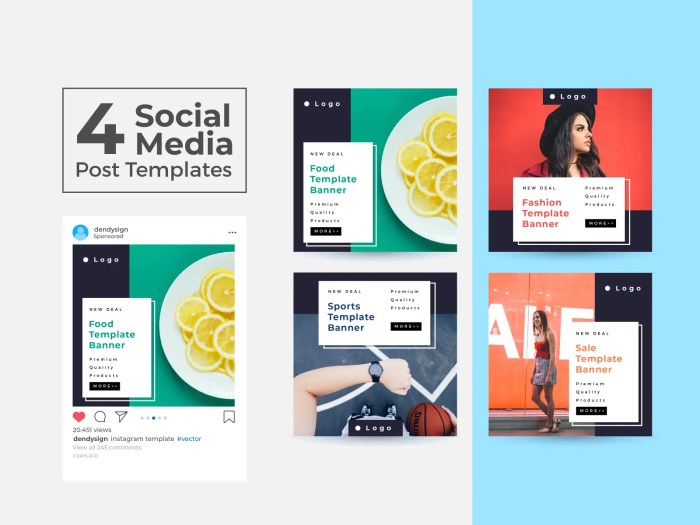
Understanding how your social media campaigns are performing is crucial for maximizing your return on investment (ROI). By tracking key metrics and analyzing the data, you can refine your strategy, create more engaging content, and ultimately achieve your marketing goals. This section details how to measure success, interpret analytics, and address low engagement.
Key Metrics for Social Media Campaign Success
Tracking the right metrics provides a clear picture of your campaign’s effectiveness. These metrics offer insights into audience engagement, reach, and overall impact. Focusing on a combination of vanity metrics (like follower count) and engagement metrics (like likes and shares) paints a more complete picture.
- Reach: The total number of unique users who saw your content. This shows the breadth of your campaign’s visibility.
- Engagement: This encompasses likes, comments, shares, saves, and clicks. High engagement indicates content resonates with your audience.
- Website Clicks: Tracking clicks from your social media posts to your website helps measure the effectiveness of driving traffic to your site.
- Conversions: These are actions you want users to take, such as making a purchase, signing up for a newsletter, or filling out a form. This directly links social media activity to business goals.
- Brand Mentions: Monitoring mentions of your brand across social media platforms helps understand public perception and identify potential issues.
- Follower Growth: While a vanity metric, consistent follower growth indicates a successful strategy in attracting and retaining your target audience.
Interpreting Social Media Analytics to Identify Resonating Content
Social media analytics platforms (like those built into Facebook, Instagram, Twitter, etc.) provide detailed data on post performance. By analyzing this data, you can identify trends and patterns that reveal what types of content resonate most with your audience. For instance, posts with high engagement rates (likes, comments, shares) and strong click-through rates indicate successful content. Conversely, low engagement suggests areas for improvement. Comparing the performance of different content formats (videos, images, text) can help optimize your content strategy.
Addressing Low Engagement on a Social Media Post
Let’s say a recent post promoting a new product received significantly lower engagement than expected. A plan to address this might look like this:
- Analysis (Day 1): Review the post’s analytics. Identify what aspects may have contributed to low engagement (poor visuals, unclear messaging, incorrect targeting, etc.).
- Hypothesis Formation (Day 1-2): Based on the analysis, formulate a hypothesis about the cause of low engagement. For example, “The visuals were not compelling enough to capture audience attention.”
- Solution Design (Day 2-3): Develop a solution to address the identified problem. For example, create a new, more visually appealing image or video.
- A/B Testing (Day 3-7): Create two versions of the post – one with the original content and one with the improved content. Run an A/B test to see which version performs better.
- Results Analysis (Day 7-10): Analyze the results of the A/B test. Identify the winning version and its key performance indicators (KPIs).
- Implementation (Day 10 onwards): Implement the successful approach for future posts and refine your content strategy accordingly.
Flowchart for Improving Social Media Performance
Imagine a flowchart. It would start with a “Problem Identified” box (e.g., low engagement). This leads to a “Hypothesis Generation” box (e.g., poor image quality). Next, a “Solution Design” box (e.g., create higher-quality image) is followed by a “Testing” box (e.g., A/B testing with old and new image). Finally, “Results Analysis” (e.g., compare engagement rates) determines whether the solution worked. If yes, it leads to “Implement and Iterate”; if no, it loops back to “Hypothesis Generation” to refine the approach. The flowchart visually represents a cyclical process of problem identification, solution development, testing, and refinement.
Ultimate Conclusion
By understanding your audience, utilizing diverse content formats, and consistently analyzing your performance, you can unlock the full potential of social media. Remember, creating engaging content isn’t just about posting; it’s about building relationships, fostering community, and driving meaningful interactions. Continuously refine your strategy based on data and audience feedback to ensure your social media efforts remain relevant, resonant, and ultimately, successful. Implement the strategies Artikeld here and watch your engagement soar.