Maintaining optimal hydration is crucial for overall health and well-being, impacting everything from physical performance to cognitive function. Understanding your individual hydration needs and employing practical strategies to meet them can significantly improve your daily life. This guide explores four key tips to help you achieve and maintain peak hydration levels.
From identifying the signs of dehydration and overhydration to creating personalized hydration plans and incorporating a variety of hydrating fluids into your routine, we’ll cover practical strategies to make staying hydrated effortless and enjoyable. We’ll also examine the profound effects of proper hydration on your physical and mental health, leaving you feeling energized and revitalized.
Understanding Your Hydration Needs
Maintaining adequate hydration is crucial for overall health and well-being. Individual hydration needs vary significantly depending on several key factors, and recognizing these factors is the first step towards optimizing your fluid intake. Understanding the signs of both dehydration and overhydration is equally important to ensure you’re maintaining a healthy balance.
Factors Influencing Hydration Requirements
Several factors influence how much water your body needs daily. Age, activity level, and climate all play significant roles in determining your individual hydration requirements. Older adults, for example, often have a decreased sense of thirst, making them more susceptible to dehydration. Individuals engaging in strenuous physical activity lose more fluids through sweat and require increased hydration to compensate. Similarly, hot and humid climates accelerate fluid loss, necessitating a higher daily intake.
Signs and Symptoms of Dehydration and Overhydration
Recognizing the signs of dehydration and overhydration is essential for maintaining a healthy hydration balance. Dehydration symptoms can range from mild (dry mouth, fatigue) to severe (dizziness, rapid heartbeat, confusion). Overhydration, while less common, can also be dangerous, potentially leading to nausea, vomiting, and in severe cases, seizures. Early recognition of these symptoms is key to prompt intervention.
Daily Hydration Intake Guide
There’s no one-size-fits-all answer to daily fluid intake. However, general guidelines exist, taking into account the factors previously discussed. A healthy adult might need around 8 glasses of water per day, but this can increase significantly with increased activity or in hotter climates. For instance, a marathon runner will require considerably more fluids than someone leading a sedentary lifestyle in a temperate climate. It’s important to listen to your body and adjust your intake based on thirst, urine color (pale yellow is ideal), and activity level. Consult a healthcare professional for personalized recommendations, particularly if you have underlying health conditions.
Comparison of Fluids and Hydration Effectiveness
Different fluids offer varying levels of hydration. While water is the most effective and readily available source, other beverages contribute to overall fluid intake. The following table compares several fluids, considering their electrolyte content and overall pros and cons:
| Fluid Type | Electrolytes | Pros | Cons |
|---|---|---|---|
| Water | None | Calorie-free, readily available, best for hydration | Can become monotonous |
| Sports Drinks | Electrolytes (sodium, potassium) | Replenishes electrolytes lost through sweat, beneficial during intense exercise | Often high in sugar, not necessary for everyday hydration |
| Fruit Juice | Some electrolytes, natural sugars | Provides vitamins and minerals, can be hydrating | High in sugar, can contribute to weight gain if consumed excessively |
| Coconut Water | Electrolytes (potassium) | Naturally hydrating, good source of potassium | Can be high in sugar, may not be suitable for everyone |
Practical Tips for Staying Hydrated Throughout the Day
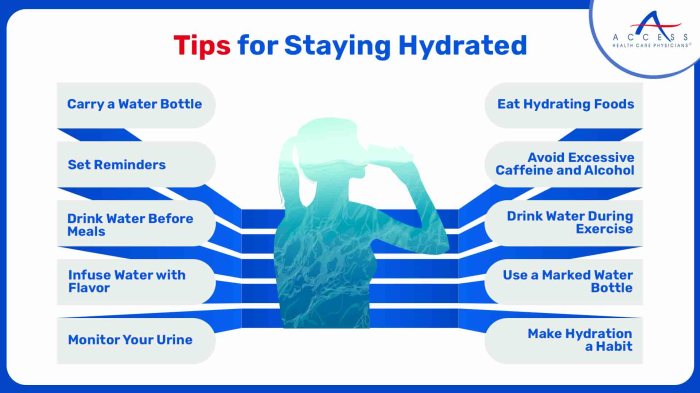
Maintaining adequate hydration is crucial for overall health and well-being. However, simply knowing *why* to drink water isn’t enough; practical strategies are needed to translate that knowledge into consistent hydration habits. This section provides actionable tips to seamlessly integrate hydration into your daily routine.
Increasing your daily water intake doesn’t require drastic changes; rather, it involves incorporating small, manageable adjustments that accumulate significant benefits over time. Creative strategies, coupled with mindful planning, can make staying hydrated a natural part of your day.
Creative Strategies for Increasing Daily Water Consumption
Beyond simply drinking glass after glass of water, consider these creative approaches to boost your fluid intake. Infusing water with fruits like cucumber, lemon, or berries adds a refreshing twist, making it more appealing to consume. Similarly, incorporating hydrating foods like watermelon, spinach, and oranges contributes significantly to your overall fluid balance. Setting a personal hydration challenge, perhaps aiming for a specific increase in water intake each week, can provide motivation and track progress. Consider making it a game or challenge with friends to increase engagement.
Sample Weekly Hydration Schedule
A structured approach to hydration can be incredibly beneficial. The following sample schedule incorporates diverse fluids, catering to various tastes and preferences, and demonstrates the importance of consistency. This schedule is a suggestion; adjust it based on your individual needs and preferences, considering factors like activity level and climate.
| Day | Morning | Midday | Afternoon | Evening |
|---|---|---|---|---|
| Monday | 2 cups water + 1 cup herbal tea | 1 cup water + 1/2 cup orange juice | 1 cup water + 1/2 cup broth based soup | 1 cup water |
| Tuesday | 2 cups water | 1 cup water + 1/2 cup coconut water | 1 cup water + small piece of watermelon | 1 cup herbal tea |
| Wednesday | 2 cups water + 1 cup green tea | 1 cup water | 1 cup water + 1/2 cup unsweetened iced tea | 1 cup water |
| Thursday | 2 cups water | 1 cup water + 1/2 cup diluted fruit juice | 1 cup water + a piece of fruit | 1 cup herbal tea |
| Friday | 2 cups water + 1 cup herbal tea | 1 cup water + 1/2 cup vegetable juice | 1 cup water | 1 cup water |
| Saturday | 2 cups water | 1 cup water + 1/2 cup smoothie | 1 cup water + a piece of fruit | 1 cup water |
| Sunday | 2 cups water + 1 cup green tea | 1 cup water + 1/2 cup diluted fruit juice | 1 cup water | 1 cup water |
Benefits of Reusable Water Bottles and Hydration Reminders
Carrying a reusable water bottle promotes consistent hydration throughout the day. Its constant visibility serves as a visual reminder to drink. Setting hydration reminders, whether through phone apps or simple alarms, ensures you stay on track. These reminders help build a consistent hydration habit, preventing dehydration from sneaking up on you.
Easily Accessible, Healthy Hydration Options
Having readily available, healthy hydration choices minimizes the temptation to reach for less beneficial beverages. This section provides examples of convenient and nutritious options for various times of the day.
- Morning: Water infused with lemon or cucumber, herbal tea, a glass of water with a small squeeze of lemon
- Midday: Water, diluted fruit juice, coconut water, broth-based soup
- Afternoon: Water, unsweetened iced tea, infused water, a piece of fruit (watermelon, berries)
- Evening: Water, herbal tea (decaffeinated)
Hydration and its Impact on Overall Health
Adequate hydration is not merely about quenching thirst; it’s fundamental to numerous bodily functions and significantly impacts overall health and well-being. Maintaining optimal hydration levels supports physical performance, cognitive function, skin health, and contributes to disease prevention. The following sections detail these crucial connections.
Hydration’s Role in Physical Performance and Recovery
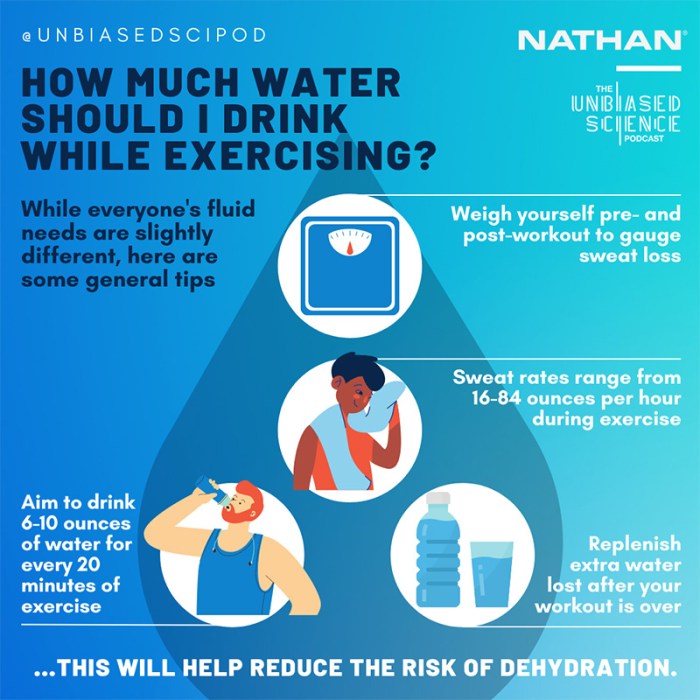
Proper hydration is essential for peak physical performance. During exercise, the body loses fluids through sweat, leading to dehydration if not replenished. Dehydration can impair cardiovascular function, reduce muscle strength and endurance, increase fatigue, and elevate the risk of heatstroke. Conversely, adequate hydration optimizes blood volume, allowing for efficient oxygen and nutrient delivery to working muscles. This results in improved endurance, quicker recovery times, and a reduced risk of injury. For example, studies have shown that even mild dehydration (as little as 2% loss of body weight through sweat) can negatively impact athletic performance, reducing endurance capacity by up to 10%. Post-exercise rehydration is crucial to restore fluid balance and facilitate muscle recovery, minimizing muscle soreness and promoting faster repair of damaged tissues.
Hydration and Cognitive Function
The brain is highly sensitive to dehydration. Even mild dehydration can impair cognitive function, impacting concentration, memory, and mood. Dehydration reduces blood volume, which can lead to decreased blood flow to the brain, affecting its ability to function optimally. Studies have shown that even a small degree of dehydration can lead to decreased alertness, impaired attention, and reduced cognitive performance, particularly tasks requiring complex reasoning or decision-making. Maintaining adequate hydration ensures the brain receives sufficient oxygen and nutrients, supporting optimal cognitive function and enhancing focus and concentration. For instance, a study published in the British Journal of Nutrition demonstrated a significant correlation between hydration status and cognitive performance in healthy adults.
Hydration’s Impact on Skin Health and Appearance
Skin is the body’s largest organ, and proper hydration is crucial for its health and appearance. Water plays a vital role in maintaining skin elasticity and suppleness. Dehydration can lead to dry, flaky skin, reduced skin elasticity, and a dull complexion. Adequate hydration helps the skin maintain its natural barrier function, protecting it from environmental damage and preventing premature aging. Conversely, sufficient hydration contributes to a more radiant and youthful appearance. The skin’s ability to effectively repair itself is also enhanced with proper hydration.
Hydration and Overall Well-being and Disease Prevention
Proper hydration supports numerous bodily functions, contributing to overall well-being and reducing the risk of various health problems. Water is involved in many metabolic processes, aiding digestion, nutrient absorption, and the elimination of waste products. Adequate hydration helps maintain normal body temperature, supports kidney function, and can even contribute to weight management by promoting satiety and aiding in the digestion of food. Studies suggest a link between chronic dehydration and an increased risk of certain health conditions, including kidney stones, constipation, and urinary tract infections. Maintaining optimal hydration levels is a simple yet effective strategy for supporting overall health and preventing these potential issues.
Last Word
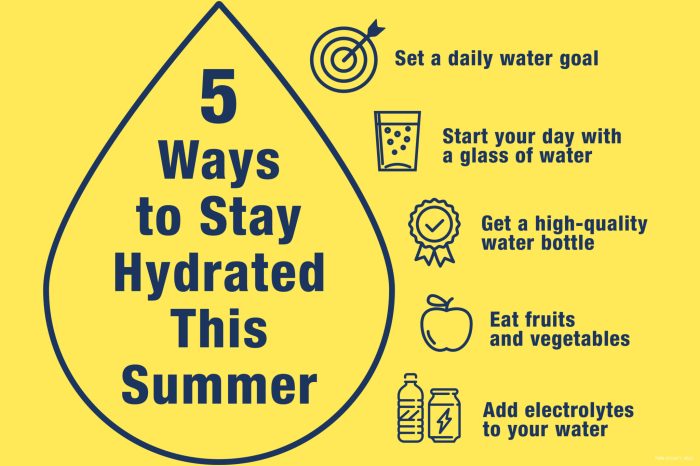
Successfully optimizing your hydration is a journey, not a destination. By understanding your individual needs, implementing practical strategies, and consistently prioritizing hydration, you’ll experience significant improvements in your energy levels, cognitive function, and overall health. Remember, even small changes can make a big difference in your well-being. Prioritize hydration and reap the rewards of a healthier, more vibrant you.