Unlocking fluency in a new language can feel daunting, but with the right approach, the journey becomes significantly more rewarding. This guide unveils five strategic approaches to optimize your language learning, transforming the process from a laborious task into an engaging and effective experience. We’ll explore techniques to create immersive learning environments, harness the power of active recall and spaced repetition, and leverage the wealth of resources available in the digital age.
From designing personalized flashcard systems to strategically utilizing technology and online communities, we’ll equip you with practical tools and actionable strategies to accelerate your progress. Whether you’re a complete beginner or seeking to refine existing methods, these techniques are designed to cater to diverse learning styles and schedules, helping you achieve your language learning goals efficiently and enjoyably.
Immersive Learning Experiences
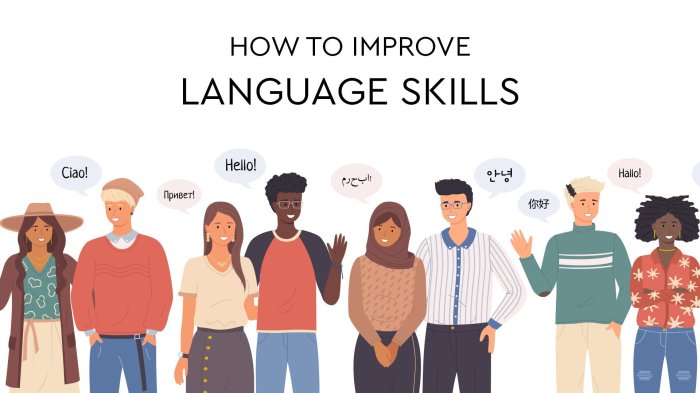
Creating an immersive language learning environment is key to accelerating your progress. By strategically incorporating your target language into your daily life, you can foster a deeper understanding and fluency more effectively than through traditional methods alone. This section Artikels practical strategies to achieve this, focusing on home-based learning and leveraging readily available resources.
Building an immersive environment involves more than just studying textbooks; it’s about transforming your surroundings and daily routines to actively engage with the language. This active engagement, rather than passive study, is crucial for effective learning.
Designing a Home Language Learning Environment
A successful home language learning environment utilizes readily available resources to create consistent exposure to the target language. Begin by labeling everyday household items with their names in your target language. For example, stick notes with “mesa” (table) on your table, “silla” (chair) on your chair, and so on. Next, change your phone and computer settings to your target language. Watch movies and TV shows with subtitles in the target language, gradually reducing your reliance on your native language subtitles. Listen to podcasts and music in the target language while you commute or perform chores. Engage with social media in the target language, following accounts related to your interests. Cooking? Follow a recipe in your target language. The goal is to surround yourself with the language as much as possible.
Creating a Personalized Flashcard Deck with Spaced Repetition
Spaced repetition systems (SRS) are powerful tools for memorization. Create a flashcard deck using digital tools like Anki or Quizlet, or even physical flashcards. For each word or phrase, include not just the translation but also an image, a sentence example, and a mnemonic device to aid memorization. For example, if learning the word “gato” (cat), include a picture of a cat, a sentence like “El gato está en la casa” (The cat is in the house), and a mnemonic device like associating “gato” with “gate” (because cats like to go through gates). SRS algorithms will then show you cards based on your performance, ensuring you review material just before you’re likely to forget it. This targeted review maximizes retention and minimizes wasted study time.
Language Exchange Partners versus Formal Tutoring
Language exchange partners offer opportunities for conversational practice and cultural exchange, fostering a more relaxed and informal learning environment. However, they may lack the structured curriculum and focused feedback provided by a formal tutor. Formal tutoring, on the other hand, provides a structured learning path and personalized feedback, but can be more expensive and less flexible. The optimal choice depends on individual learning styles and preferences. Those who thrive in informal settings and prefer conversational practice may benefit more from language exchange partners, while learners who prefer structured learning and focused feedback may benefit from formal tutoring.
Sample Language Learning Schedule for a Busy Lifestyle
Integrating language learning into a busy lifestyle requires careful planning and commitment. A sample schedule could involve 15 minutes of vocabulary review using flashcards each morning, 30 minutes of listening to a podcast during your commute, and an hour of conversation practice with a language partner twice a week in the evening. Weekends could include longer study sessions focusing on grammar or reading. This flexible schedule can be adjusted based on individual needs and priorities, ensuring consistent progress without overwhelming your daily routine. Remember, consistency is key; even short, regular study sessions are more effective than sporadic, lengthy ones.
Active Recall and Spaced Repetition

Effective language learning hinges on more than just passive exposure; it demands active engagement with the material. Active recall and spaced repetition are powerful techniques that significantly boost memory retention and accelerate the learning process. By actively retrieving information from memory, you strengthen neural pathways and improve long-term retention. Spaced repetition, in turn, optimizes the timing of review to maximize the effectiveness of this recall.
Active Recall Techniques
Active recall involves consciously retrieving information from memory without relying on cues or hints. This deliberate effort strengthens memory consolidation and enhances long-term retention. The following table Artikels five effective active recall techniques:
| Technique Name | Description | Example | Benefits |
|---|---|---|---|
| Flashcards | Write a term or concept on one side of a card and its definition or translation on the other. Test yourself by looking at one side and recalling the other. | One side: “Chateau”; Other side: “Castle (French)” | Promotes quick recall, ideal for vocabulary and grammar rules; easily adaptable to various learning styles. |
| Self-Testing | Regularly quiz yourself on the material you’ve learned, using practice questions or by creating your own tests. | After reading a chapter on past tenses, create five sentences using different past tense verbs and check your accuracy. | Identifies knowledge gaps, allows for targeted review, enhances understanding of concepts. |
| The Feynman Technique | Explain a concept in simple terms, as if teaching it to someone with no prior knowledge. Identify areas where your understanding is weak. | Explain the concept of “passive voice” in a way a child could understand, highlighting any gaps in your own explanation. | Reveals weak points in understanding, forces concise and clear articulation of concepts. |
| Practice Retrieval | Try to recall information from memory at various intervals without looking at your notes or textbooks. | At the end of each study session, write down everything you can remember about the topic without referring to your materials. | Reinforces memory traces, improves recall accuracy and speed. |
| Mind Mapping | Create a visual representation of concepts and their relationships, using s and connecting lines. Use it to test your recall of related information. | Create a mind map connecting various grammatical tenses in a language, showing their relationships and usage. | Enhances understanding of complex concepts, improves memory through visual association. |
Spaced Repetition Systems (SRS)
Spaced repetition systems (SRS) are based on the psychological principle of the forgetting curve. This curve illustrates that we tend to forget newly learned information rapidly unless it is reviewed at increasing intervals. SRS algorithms dynamically adjust the timing of review sessions based on your performance, presenting information just before you’re likely to forget it. This optimized scheduling maximizes long-term retention with minimal effort. Popular examples of SRS software include Anki, Memrise, and Quizlet.
Implementing Spaced Repetition for Vocabulary and Grammar
To effectively utilize SRS for vocabulary acquisition, create flashcards with the target word on one side and its definition, example sentence, and pronunciation on the other. For grammar practice, create flashcards illustrating grammatical rules with examples and non-examples. Anki, for instance, allows for the creation of custom decks tailored to your specific learning needs. Schedule reviews according to the SRS algorithm; initially reviewing frequently and gradually increasing the intervals between reviews as your mastery improves.
Creating a Personalized SRS Schedule
A personalized SRS schedule adapts to your individual learning pace and preferences. Start with a manageable number of new flashcards daily or weekly. Adjust the review intervals based on your performance. If you consistently answer correctly, increase the interval; if you struggle, decrease it. Experiment with different review schedules to find what works best for you. For example, if you find you are consistently forgetting vocabulary after three days, reduce the review interval to two days. Conversely, if you retain information well after a week, you can increase the interval accordingly. Remember, consistency is key. Regular, even short, review sessions are more effective than infrequent, lengthy ones.
Strategic Use of Resources and Technology
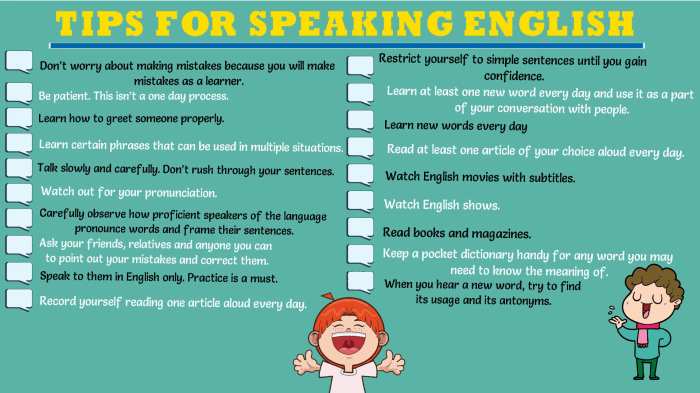
Effective language learning isn’t just about textbooks and classrooms; it’s about strategically leveraging the vast array of resources and technologies available today. This section explores how to harness the power of apps, online tools, media, and social platforms to optimize your language acquisition journey. By integrating these resources effectively, you can create a dynamic and engaging learning experience that caters to your individual learning style and goals.
Popular Language Learning Apps: A Comparison
Choosing the right language learning app can significantly impact your progress. Different apps cater to different learning styles and preferences. The following table compares three popular options: Duolingo, Memrise, and Babbel.
| Feature | Duolingo | Memrise | Babbel |
|---|---|---|---|
| User Interface | Intuitive and gamified; easy to navigate. | Visually engaging, uses mnemonics and flashcards. Can feel cluttered at times. | Clean and modern; focuses on structured lessons. |
| Features | Wide range of languages; gamified lessons; progress tracking; free and paid options. | Focuses on vocabulary building using flashcards and spaced repetition; community features. | Structured curriculum; emphasizes grammar and pronunciation; more expensive than Duolingo. |
| Effectiveness | Good for beginners; effective for vocabulary acquisition; gamification can be motivating, but may lack depth. | Excellent for memorization; mnemonics aid retention; can be less effective for grammar. | Strong focus on grammar and conversational skills; good for building a solid foundation; can be less engaging for some learners. |
Free Online Resources for Language Learning
Free online resources offer a wealth of opportunities to enhance various aspects of language proficiency. Utilizing these resources effectively can supplement your learning and accelerate your progress.
The following list presents five valuable free online resources and their applications:
- Forvo: This website provides pronunciation guides for words and phrases in various languages, improving listening comprehension and pronunciation skills.
- News in Slow Slow English/Spanish: These websites offer news articles in simplified language, improving reading comprehension and vocabulary acquisition.
- YouTube Channels (e.g., Easy German, Learn Spanish with SpanishPod101): These channels offer lessons, dialogues, and cultural insights, enhancing listening and speaking skills.
- Lang-8: This website allows native speakers to correct your writing, significantly improving writing skills and grammar.
- HelloTalk: This app connects language learners, facilitating language exchange and conversational practice, thereby improving speaking fluency and cultural understanding.
Effective Use of Subtitles and Media
Subtitles, podcasts, movies, and music are powerful tools for immersive language learning. Strategic use of these resources can significantly enhance comprehension and vocabulary acquisition.
Here are some techniques:
- Start with subtitles in your native language, then switch to subtitles in the target language. This gradual transition helps bridge the gap between comprehension and exposure to the target language.
- Actively listen for s and phrases. Pay attention to how words are used in context, and note down unfamiliar vocabulary for later review.
- Watch movies and TV shows multiple times. Each viewing will reveal new nuances and vocabulary. Consider pausing and rewinding to focus on specific sections.
- Listen to podcasts at varying speeds. Start with slower speeds for better comprehension and gradually increase the speed as your proficiency improves.
- Use music to learn vocabulary and pronunciation. Look up lyrics and try to sing along, paying attention to the rhythm and intonation.
Leveraging Social Media and Online Communities
Social media and online communities offer valuable opportunities for practicing the target language in a supportive and engaging environment.
Here’s a plan for effective utilization:
- Join language learning groups on Facebook, Reddit, or other platforms. Engage in discussions, ask questions, and share your progress with other learners.
- Follow native speakers on social media. Observe their language use, learn new vocabulary and expressions, and participate in conversations when comfortable.
- Use language exchange apps like HelloTalk or Tandem. Connect with native speakers for conversation practice and mutual language learning.
- Create content in the target language. Share your writing, videos, or audio recordings on social media to receive feedback and practice your skills.
- Set realistic goals and track your progress. Celebrate your achievements and stay motivated throughout the process.
Conclusive Thoughts
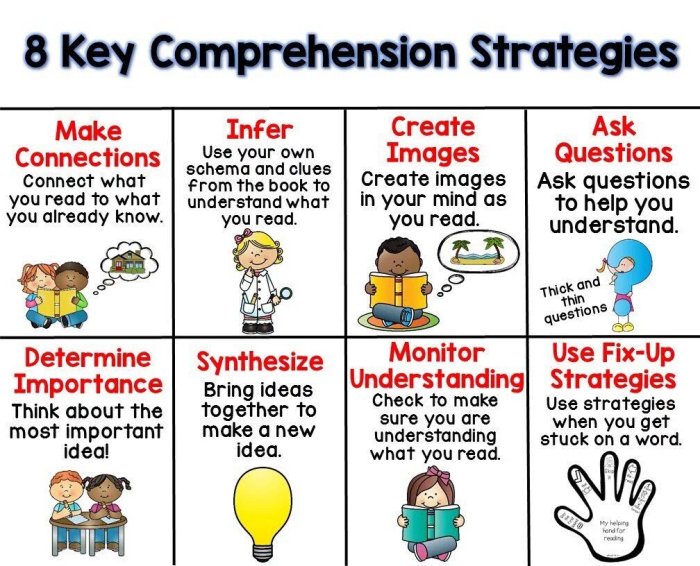
Mastering a new language is a journey of continuous improvement, and this guide provides a roadmap for optimizing your path. By implementing these five strategies—immersive learning, active recall, strategic resource utilization, and consistent practice—you’ll not only enhance your language acquisition but also cultivate a more engaging and sustainable learning process. Remember that consistency and adaptation are key; find the methods that resonate most with your learning style and embrace the ongoing evolution of your linguistic abilities.