Effective leadership isn’t innate; it’s a skill honed through self-awareness, strategic development, and consistent adaptation. This guide delves into six key traits that distinguish exceptional leaders from the rest, providing a practical framework for optimizing your own leadership style and fostering high-performing teams. We’ll explore how to identify your strengths and weaknesses, cultivate crucial skills like empathy and communication, and implement strategies for effective delegation and feedback.
Understanding your leadership style is the first step towards maximizing your impact. By analyzing your current approach and comparing it to established leadership models, you can pinpoint areas for growth and create a personalized plan for improvement. This journey involves not only self-reflection but also a commitment to continuous learning and development, embracing feedback and adapting your methods to achieve optimal results.
Identifying Your Leadership Strengths and Weaknesses
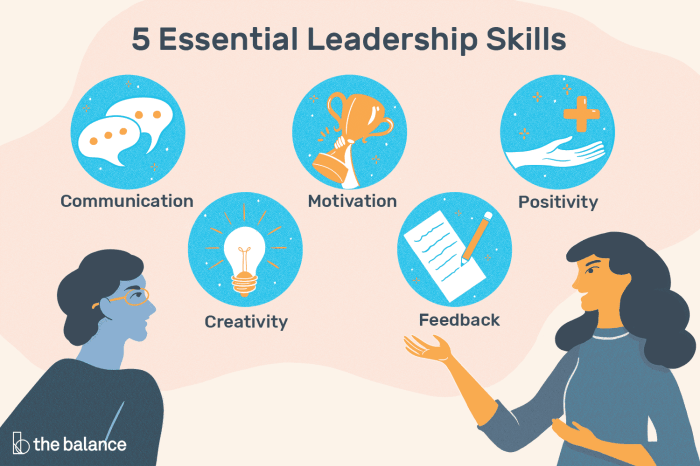
Understanding one’s leadership strengths and weaknesses is crucial for effective team management and personal growth. A self-aware leader can leverage their strengths to maximize team performance and proactively address areas needing improvement. This process allows for continuous development and ultimately leads to more effective leadership.
Personal Leadership Strengths
Effective leadership is built upon a foundation of key strengths. Three of my personal strengths significantly contribute to my ability to manage teams effectively. First, I possess strong communication skills, enabling clear articulation of goals, expectations, and feedback. This ensures team members understand their roles and responsibilities, leading to improved collaboration and productivity. Second, I am adept at fostering a collaborative and inclusive environment where team members feel valued and empowered to contribute their unique perspectives. This collaborative approach fuels creativity and problem-solving. Finally, I demonstrate a consistent commitment to providing constructive feedback and mentorship, guiding team members toward professional development and growth. This cultivates a culture of continuous improvement within the team.
Areas for Leadership Improvement
While possessing several leadership strengths, I also recognize areas where improvement is necessary. Two key areas for development are delegation and conflict resolution. I sometimes struggle to effectively delegate tasks, retaining too much responsibility myself. This can lead to burnout and hinder team member growth. To address this, I plan to implement a structured delegation process, clearly defining roles, responsibilities, and expected outcomes for each task. I will also provide adequate training and support to team members taking on new responsibilities. Secondly, I aim to enhance my conflict resolution skills. While I strive for a positive team environment, I sometimes avoid direct confrontation during conflicts. To improve, I will actively participate in conflict resolution training and practice techniques for mediating disagreements constructively and fairly, ensuring all perspectives are heard and addressed.
Comparison to a Respected Leader
My leadership style shares similarities with that of Indra Nooyi, the former CEO of PepsiCo. Like Nooyi, I prioritize building strong relationships with team members, fostering a culture of trust and collaboration. However, a key difference lies in my approach to delegation. Nooyi was known for her ability to effectively delegate and empower her team, a skill I am actively working to develop, as discussed previously. Her ability to maintain a balance between strategic vision and operational execution is also an area I aspire to emulate.
SWOT Analysis of Leadership Style
| Strengths | Weaknesses | Opportunities | Threats |
|---|---|---|---|
| Strong communication skills | Delegation challenges | Formal conflict resolution training | Team member turnover |
| Collaborative team environment | Avoidance of direct confrontation | Mentorship programs for team development | Changes in organizational structure |
| Commitment to mentorship and feedback | Work-life balance | Leadership workshops and conferences | Competition for resources |
Developing Key Leadership Traits
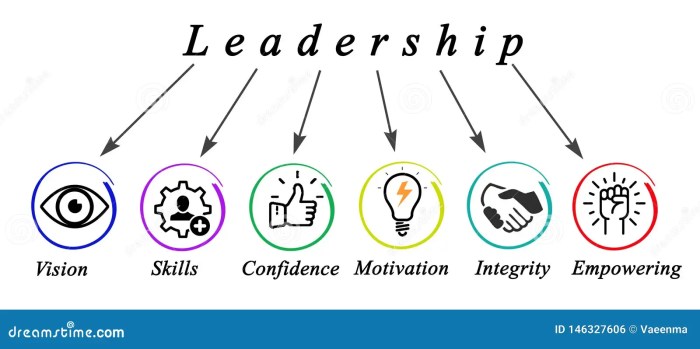
Developing empathy, effective communication, and sound decision-making are crucial for effective leadership. These traits significantly impact team dynamics, project success, and overall organizational performance. Cultivating these skills allows leaders to build strong relationships, navigate complex situations, and inspire confidence in their teams.
Empathy’s Role in Team Cohesion and Problem-Solving
Empathy, the ability to understand and share the feelings of others, is a cornerstone of effective leadership. It fosters trust and strengthens team bonds by creating a sense of psychological safety. When team members feel understood and valued, they are more likely to collaborate effectively, openly share ideas, and contribute their best work. For example, a project manager demonstrating empathy by acknowledging the stress of a tight deadline and offering support will likely see increased team morale and productivity compared to a manager who simply demands results without considering the team’s perspective. In problem-solving, empathy helps leaders identify the root causes of issues by understanding the perspectives and challenges faced by different team members. This holistic approach leads to more creative and effective solutions. Consider a situation where a team is struggling with a technical problem; an empathetic leader would actively listen to each team member’s concerns and perspectives, leading to a more comprehensive understanding of the problem and a more robust solution.
A Communication Strategy for Diverse Teams
Effectively conveying complex information to a diverse team requires a multi-faceted approach. A robust communication strategy should consider the varying communication styles, cultural backgrounds, and technical expertise within the team. The strategy should prioritize clarity, conciseness, and accessibility. This can involve using various communication channels, such as emails, meetings, and informal check-ins, to cater to individual preferences and learning styles. Visual aids, such as charts and graphs, can help simplify complex data. Furthermore, providing opportunities for questions and feedback throughout the communication process ensures understanding and minimizes misunderstandings. For instance, a leader presenting a new project plan might use a combination of a concise written document, a visual presentation, and a Q&A session to ensure all team members, regardless of their background or preferred communication style, understand the plan.
A Step-by-Step Process for Difficult Decision-Making
Making difficult decisions requires a structured approach that balances decisive action with thoughtful consideration. A step-by-step process might include: 1) Clearly define the problem and its context. 2) Gather relevant information from multiple sources, including data analysis and input from team members. 3) Identify and evaluate potential solutions, weighing their pros and cons. 4) Consult with key stakeholders and solicit feedback, ensuring diverse perspectives are considered. 5) Make a decision based on the available information and feedback, documenting the rationale. 6) Implement the decision and monitor its impact, making adjustments as needed. 7) Communicate the decision and its rationale transparently to the team. This structured approach ensures that decisions are well-informed, transparent, and supported by the team.
Improving Active Listening Skills
Active listening is fundamental to effective leadership. It involves fully concentrating on the speaker, understanding their message, responding thoughtfully, and remembering what was said. Three methods for improving active listening skills are:
- Paraphrasing and Summarizing: Restating the speaker’s message in your own words demonstrates understanding and encourages clarification. In a leadership context, paraphrasing a team member’s concern before offering a solution shows that you’ve heard and understood their perspective.
- Asking Clarifying Questions: Posed thoughtfully, these questions help to ensure complete understanding and uncover hidden assumptions. A leader might ask clarifying questions about a team member’s concerns to ensure a full grasp of the situation before offering solutions.
- Observing Nonverbal Cues: Paying attention to body language and tone can provide valuable insights into the speaker’s true message. A leader noticing a team member’s body language indicating stress during a meeting can adjust their communication style to create a more supportive environment.
Implementing and Adapting Your Leadership Style
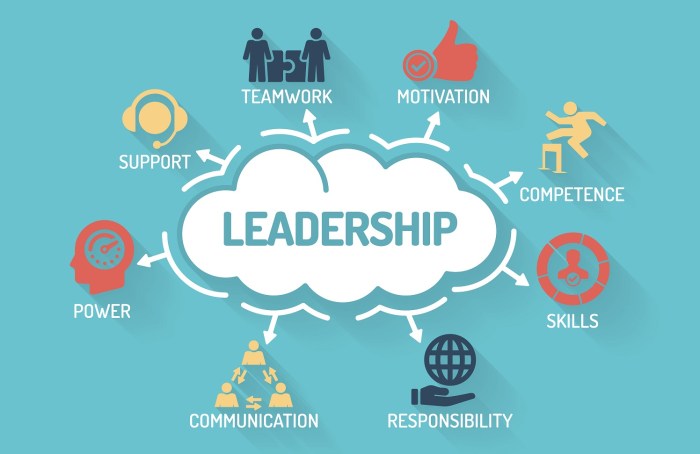
Effective leadership isn’t a one-size-fits-all approach. Adaptability is key to successfully navigating diverse team dynamics and challenging situations. This section explores practical strategies for tailoring your leadership style and fostering a positive, productive team environment.
Adapting leadership styles involves understanding individual team member needs and the context of the task at hand. A highly independent, experienced team member might thrive with a delegative approach, while a newer team member might benefit from more direct guidance and support. Similarly, a crisis situation demands decisive, directive leadership, whereas a collaborative project necessitates a more participatory style.
Adapting to Different Team Members and Situations
Effective leadership requires understanding individual team member strengths, weaknesses, and preferred working styles. For instance, a highly creative team member might benefit from a more facilitative leadership style, allowing them to contribute their innovative ideas freely. Conversely, a detail-oriented team member might appreciate a more structured, directive approach. Situational awareness is equally crucial. During a project launch, a more directive style might be necessary to ensure clear goals and timelines are established. However, during routine operations, a more supportive and empowering style might foster better team morale and engagement. Consider using different communication styles – some team members might respond better to written communication, while others prefer face-to-face interactions.
Providing Constructive Feedback
Constructive feedback is essential for individual and team growth. Different approaches can be employed depending on the situation and the individual. For example, the “Situation-Behavior-Impact” (SBI) model provides a structured framework for delivering feedback. This involves describing the specific situation, outlining the observed behavior, and clearly explaining the impact of that behavior. Another approach is the “sandwich method,” where positive feedback is given before and after constructive criticism, making the feedback more palatable. It’s important to focus on behaviors rather than personal characteristics, keeping the feedback specific, actionable, and timely. Always ensure a safe space for open dialogue and encourage two-way communication.
Developing Effective Delegation Skills
Effective delegation is crucial for optimizing team productivity and developing individual skills. Before delegating, clearly define the task, expected outcomes, deadlines, and available resources. Select the appropriate team member based on their skills and experience, ensuring they have the necessary support and authority. Provide regular check-ins to monitor progress and offer guidance, but avoid micromanagement. Acknowledge and appreciate their contributions upon completion. A training session could involve role-playing scenarios, group discussions on best practices, and case studies of successful and unsuccessful delegation attempts. The session could also include tools and techniques for effective task breakdown, clear communication of expectations, and monitoring progress without being overly controlling.
Fostering a Culture of Trust and Accountability
A strong team culture built on trust and accountability is essential for high performance. This can be achieved through several actionable steps:
- Establish clear expectations and goals: Ensure everyone understands their roles, responsibilities, and performance standards.
- Promote open communication: Create a safe space for team members to share ideas, concerns, and feedback without fear of retribution.
- Lead by example: Demonstrate accountability in your own actions and decisions.
- Recognize and reward achievements: Acknowledge individual and team successes to reinforce positive behaviors.
- Address conflicts constructively: Implement processes for resolving disagreements fairly and efficiently.
- Provide regular feedback and coaching: Offer support and guidance to help team members develop their skills and improve their performance.
- Encourage collaboration and teamwork: Foster a supportive environment where team members work together effectively.
Last Recap
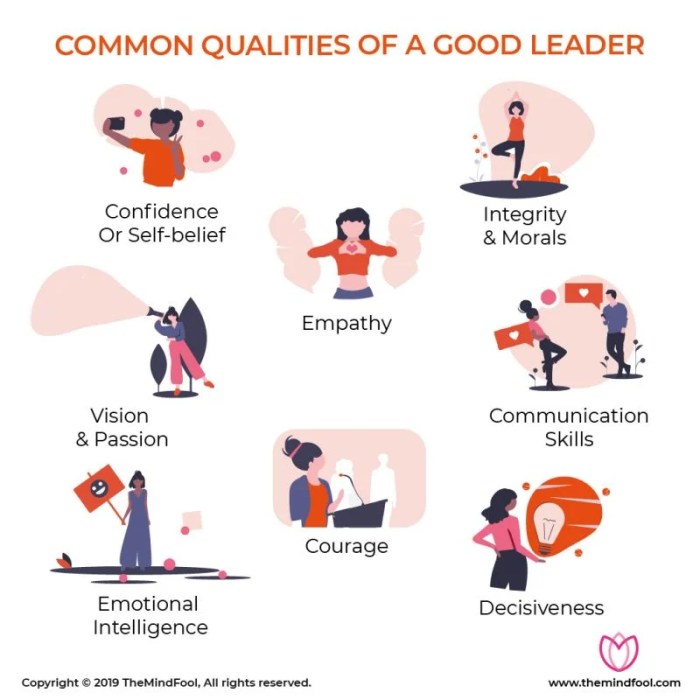
Mastering leadership is an ongoing process, a continuous journey of self-improvement and adaptation. By focusing on developing empathy, mastering communication, and implementing effective decision-making strategies, you can cultivate a culture of trust and accountability within your team. Remember that effective leadership isn’t about wielding authority, but about empowering others to achieve shared goals. Continuously refine your approach, seek feedback, and adapt your style to the ever-evolving needs of your team and organization; this is the path to becoming a truly impactful leader.