Unlocking the power of emotional intelligence is key to navigating life’s complexities with greater ease and success. This guide provides six practical strategies to enhance your self-awareness, fostering stronger relationships, improved decision-making, and increased overall well-being. We’ll explore how understanding your emotional responses, practicing mindfulness, and developing effective coping mechanisms can lead to a more fulfilling and balanced life.
From identifying and labeling emotions to utilizing feedback and practicing self-compassion, we’ll delve into actionable techniques that empower you to take control of your emotional landscape. This journey of self-discovery will equip you with the tools to manage stress, navigate challenging situations, and cultivate a deeper understanding of yourself and others.
Understanding Your Emotions
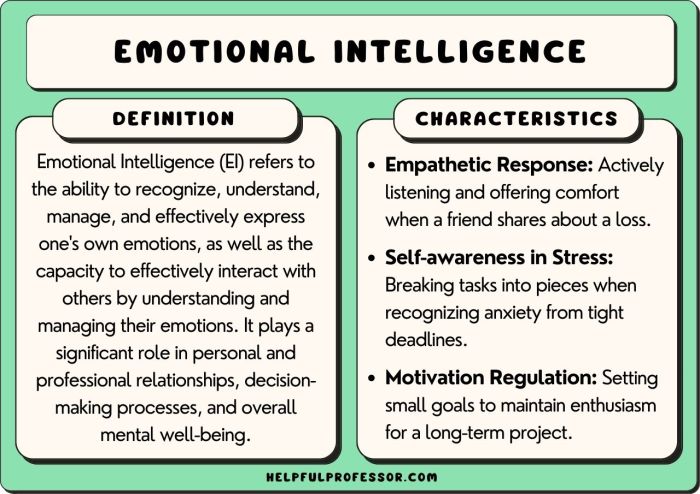
Developing a deep understanding of your emotional landscape is fundamental to improving your emotional intelligence. Recognizing and interpreting your emotional responses allows for more effective self-management and improved interactions with others. This section explores common emotional responses, the consequences of unexpressed emotions, and practical strategies for enhancing emotional awareness.
Common Emotional Responses to Challenging Situations
Individuals react differently to challenging situations, but some common emotional responses include frustration, anger, sadness, fear, anxiety, and stress. The intensity and duration of these emotions vary depending on personality, coping mechanisms, and the specific nature of the challenge. For example, a missed deadline might trigger frustration and anxiety in one person, while another might experience anger and self-criticism. Understanding the nuances of these reactions is key to managing them effectively.
The Impact of Unexpressed Emotions on Decision-Making
Unexpressed emotions rarely disappear; instead, they often simmer beneath the surface, influencing our thoughts and behaviors in subtle but significant ways. Suppressed anger, for instance, can lead to impulsive decisions or passive-aggressive behavior. Similarly, unresolved sadness might manifest as indecisiveness or avoidance. The accumulation of unexpressed emotions can cloud judgment, impair rational thinking, and ultimately hinder effective decision-making. A clear example is a manager harboring resentment towards a team member, leading to unfair performance evaluations or missed opportunities for collaboration.
Strategies for Identifying and Labeling Your Emotions
Developing the ability to identify and label your emotions is a crucial step towards emotional self-regulation. Several strategies can facilitate this process. Mindfulness practices, such as meditation or deep breathing, help cultivate present moment awareness, allowing you to observe your emotional state without judgment. Keeping a journal can also be beneficial; regularly documenting your emotional experiences helps you identify patterns and triggers. Finally, utilizing emotional vocabulary – expanding your understanding of different emotional states beyond simple “happy” or “sad” – allows for more precise self-assessment. For instance, instead of simply feeling “bad,” you might identify the emotion as “disappointed,” “frustrated,” or “overwhelmed,” which provides a more nuanced understanding of your emotional state.
Visualization: The Connection Between Physical Sensations and Emotions
Imagine a chart with two columns. The left column lists various emotions: joy, sadness, anger, fear, anxiety. The right column details corresponding physical sensations: joy might be associated with lightness in the chest and a smile; sadness with a lump in the throat and tears; anger with clenched fists and rapid heartbeat; fear with shallow breathing and trembling; anxiety with stomach upset and muscle tension. This visualization highlights the intimate relationship between emotional states and physical sensations. By paying attention to these physical cues, you can gain valuable insights into your emotional experience, even before consciously identifying the emotion itself. This heightened awareness allows for early intervention and more effective emotional regulation.
Improving Self-Awareness
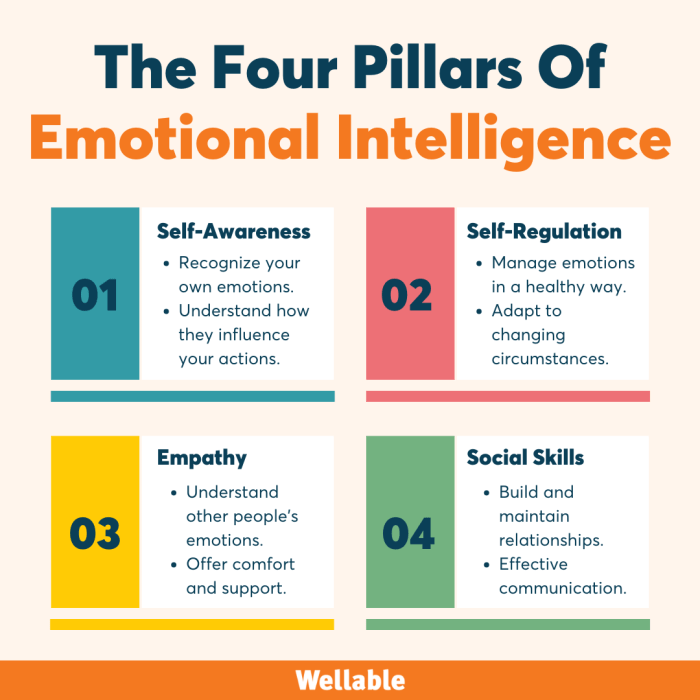
Developing a strong understanding of your emotions is only the first step towards optimizing your emotional intelligence. True mastery lies in cultivating self-awareness – the ability to recognize and understand your own emotional patterns, reactions, and biases. This involves actively observing your internal world and developing a nuanced understanding of how your thoughts, feelings, and behaviors interact. This section explores practical techniques to enhance your self-awareness.
Self-reflection and mindfulness practices are essential tools for improving self-awareness. By consciously tuning into your inner landscape, you gain valuable insights into your emotional responses and triggers. Regular practice allows you to observe your thoughts and feelings without judgment, fostering a deeper understanding of yourself.
Mindfulness and Self-Reflection Techniques
Mindfulness involves paying attention to the present moment without judgment. Simple techniques include focusing on your breath, noticing physical sensations, and observing your thoughts as they arise. Self-reflection, on the other hand, involves consciously reviewing past experiences and analyzing your emotional responses. This could involve asking yourself questions like, “What triggered that emotion?”, “How did I react?”, and “What could I have done differently?”. Combining these practices creates a powerful feedback loop for emotional growth. Regular meditation, even for short periods, can significantly enhance both mindfulness and self-reflection capabilities. For example, a five-minute guided meditation each morning can help center you and prepare you for the day, allowing you to be more aware of your emotional state throughout the day.
Journaling to Track Emotional Patterns
Maintaining a journal dedicated to tracking your emotional experiences can offer invaluable insights into your emotional patterns. Regularly recording your emotions, the situations that triggered them, and your subsequent reactions helps identify recurring themes and potential triggers. For instance, consistently noting feelings of anxiety before public speaking reveals a clear pattern, allowing you to develop coping mechanisms proactively. This process is not about self-criticism but rather about understanding your emotional landscape. The journal acts as a personal emotional map, highlighting areas for improvement and self-regulation. Try to be specific in your entries, noting not just the emotion itself (e.g., “angry”), but also the intensity and physical sensations associated with it (e.g., “intense anger, clenched jaw, rapid heartbeat”).
Utilizing Feedback from Others for an Objective View
Seeking feedback from trusted friends, family, or colleagues can provide an invaluable external perspective on your emotional responses. Others may notice patterns or reactions that you might miss. However, it’s crucial to approach this with an open mind and a willingness to learn. Remember, the goal is not to validate or invalidate your feelings but to gain a more comprehensive understanding of how your emotions are perceived by others. For example, if multiple people comment on your tendency to become defensive during disagreements, it’s a signal that warrants further self-reflection and potential behavioral adjustments. It is vital to choose individuals known for their honesty and constructive feedback, and to approach the conversation with a receptive attitude, focusing on understanding rather than defensiveness.
Practicing Self-Compassion: A Step-by-Step Guide
Self-compassion involves treating yourself with the same kindness, understanding, and acceptance that you would offer a close friend facing similar challenges. It’s a crucial aspect of emotional intelligence, as it allows you to navigate difficult emotions without self-criticism or judgment.
- Acknowledge your suffering: Recognize and validate your difficult emotions without judgment. For instance, instead of saying, “I’m such a failure,” try, “I’m going through a difficult time right now.”
- Common humanity: Remember that suffering is a universal human experience. Everyone experiences setbacks and challenges. Knowing you’re not alone in your struggles can be incredibly comforting.
- Self-kindness: Treat yourself with the same kindness and compassion you would offer a friend in need. Speak to yourself with understanding and empathy. Avoid harsh self-criticism.
- Mindfulness: Observe your emotions without judgment. Allow yourself to feel them fully without trying to suppress or ignore them. This helps to process and eventually release difficult emotions more effectively.
Practicing self-compassion regularly can significantly improve your ability to manage stress, cope with setbacks, and build resilience. It fosters a healthier relationship with yourself and allows you to approach challenges with greater emotional stability.
Enhancing Emotional Regulation
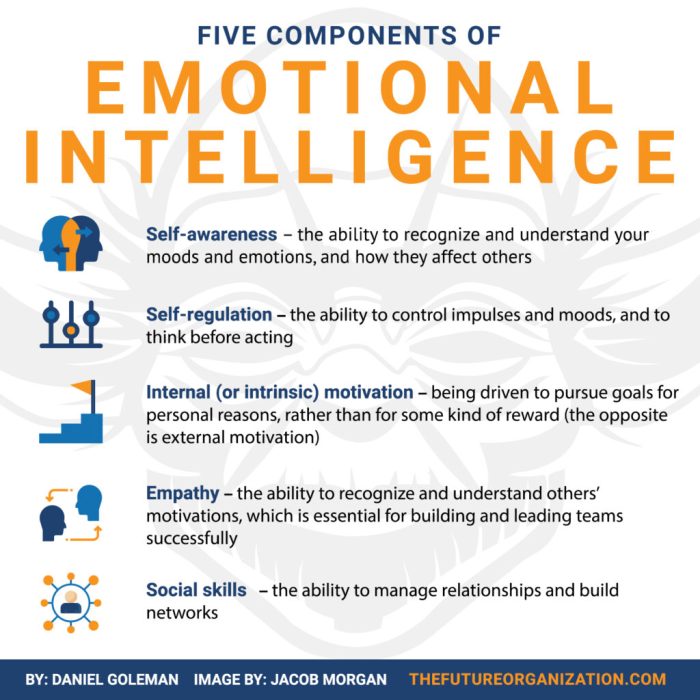
Emotional regulation, the ability to manage and control one’s emotional responses, is a cornerstone of emotional intelligence. It involves understanding your emotions, accepting them, and responding to them in a healthy and constructive way. Effective emotional regulation prevents emotional overwhelm and allows for more thoughtful and productive interactions with others and oneself.
Stress Management Techniques
Several techniques aid in managing stress, a significant factor influencing emotional regulation. These techniques can be broadly categorized into cognitive, behavioral, and physical approaches. Cognitive techniques, such as mindfulness and cognitive restructuring, involve changing thought patterns to alter emotional responses. Behavioral techniques focus on changing actions, like engaging in relaxing activities or avoiding stressful situations. Physical techniques, such as exercise and deep breathing, directly impact the body’s physiological response to stress. The effectiveness of each technique varies depending on individual preferences and the specific stressor. For example, mindfulness meditation can help reduce anxiety by focusing attention on the present moment, while regular exercise releases endorphins, improving mood and reducing stress hormones. Cognitive restructuring involves identifying and challenging negative thought patterns, replacing them with more balanced and realistic ones.
The Role of Healthy Coping Mechanisms
Healthy coping mechanisms are crucial for effective emotional regulation. These are strategies individuals employ to manage difficult emotions and stressful situations constructively. Examples include problem-solving, seeking social support, engaging in hobbies, and practicing self-compassion. Unhealthy coping mechanisms, such as substance abuse, avoidance, or aggression, can exacerbate emotional distress in the long run. Choosing healthy coping mechanisms allows individuals to process emotions effectively and develop resilience in the face of adversity. For instance, instead of resorting to excessive alcohol consumption to cope with stress, an individual might engage in a relaxing activity like yoga or spend time with supportive friends.
Common Triggers for Negative Emotions and Management Strategies
Identifying common triggers for negative emotions is the first step toward effective management. These triggers can vary widely, including specific people, places, events, or thoughts. Once identified, strategies can be developed to manage these triggers proactively or reactively. Proactive strategies involve anticipating potential triggers and implementing preventative measures, such as avoiding specific situations or practicing relaxation techniques beforehand. Reactive strategies focus on managing the emotional response once a trigger has occurred, utilizing techniques such as deep breathing exercises or cognitive reframing. For example, if a specific work project consistently triggers anxiety, a proactive approach might involve breaking the project into smaller, more manageable tasks. A reactive approach might involve taking a short break and practicing deep breathing when feelings of anxiety arise during the project.
Proactive vs. Reactive Approaches to Emotional Regulation
| Feature | Proactive Approach | Reactive Approach | Example |
|---|---|---|---|
| Timing | Before a trigger occurs | After a trigger occurs | |
| Focus | Prevention and preparation | Managing the emotional response | |
| Strategies | Mindfulness, stress reduction techniques, setting boundaries | Deep breathing, cognitive reframing, seeking support | Proactive: Scheduling regular breaks to avoid burnout; Reactive: Taking a walk to calm down after a stressful meeting. |
| Goal | Minimize the likelihood of negative emotions | Reduce the intensity and duration of negative emotions |
Summary
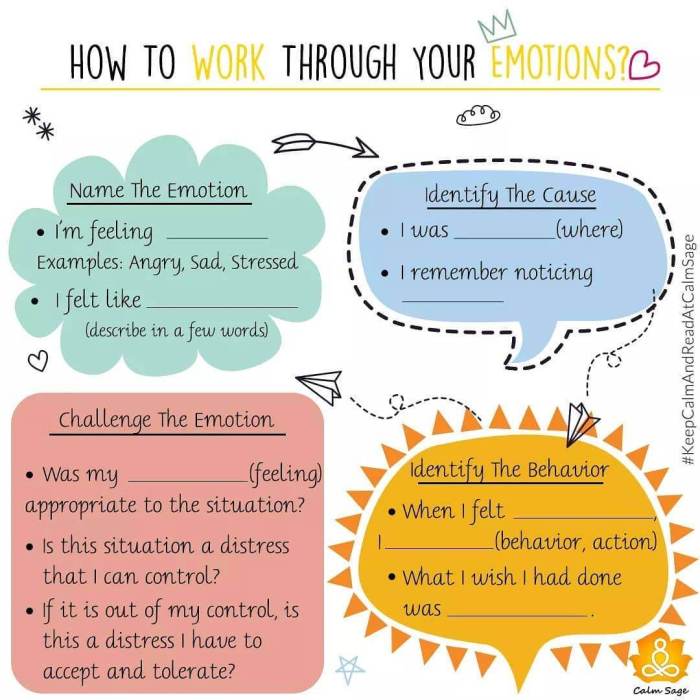
Mastering emotional intelligence is a continuous process of self-reflection and growth. By consistently applying the strategies Artikeld – understanding your emotions, improving self-awareness, and enhancing emotional regulation – you’ll cultivate a greater sense of self-control, resilience, and empathy. This journey empowers you to build stronger relationships, make more informed decisions, and ultimately, live a more meaningful and fulfilling life. Embrace the opportunity to cultivate emotional intelligence and unlock your full potential.