Unlocking the full potential of a book requires more than just reading; it demands active engagement and strategic learning. This guide unveils three key steps to optimize your learning from any book, whether fiction, non-fiction, or a dense textbook. By mastering active recall, meaningfully engaging with the material, and consolidating your knowledge, you’ll transform passive reading into profound understanding and lasting retention.
We will explore practical techniques like the Feynman Technique and spaced repetition, demonstrating how to adapt these methods to different learning styles and book types. We’ll also delve into effective note-taking strategies and the power of summarizing and teaching the material to solidify your comprehension. Prepare to elevate your reading experience and transform how you acquire and retain knowledge from books.
Active Recall Techniques
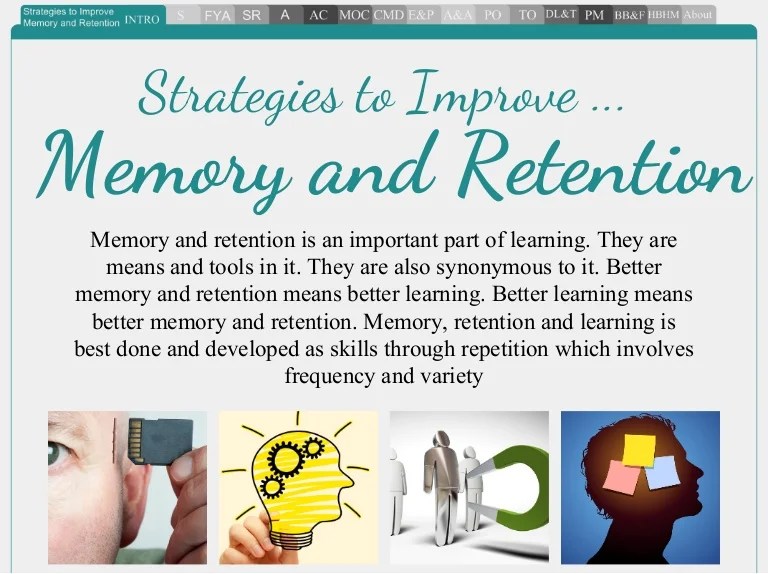
Active recall, the process of retrieving information from memory without looking at the source material, is a powerful technique for boosting learning and retention. Unlike passive rereading, active recall forces your brain to actively engage with the material, strengthening memory pathways and improving long-term comprehension. By consistently practicing active recall, you can significantly improve your ability to retain information from any type of book.
The Feynman Technique and Self-Testing
The Feynman Technique, named after the renowned physicist Richard Feynman, involves explaining a concept in your own words as if you were teaching it to someone else. This process highlights areas where your understanding is weak, forcing you to revisit the material and solidify your grasp. Self-testing, on the other hand, involves quizzing yourself on the material using flashcards, practice questions, or by simply trying to recall key information without referring to the book. Both methods are highly effective, and their application varies depending on the book type.
For fiction books, the Feynman Technique can involve summarizing plot points and character arcs in your own words, focusing on the underlying themes and motivations. Self-testing might involve recalling key events or predicting plot developments. For non-fiction books, the Feynman Technique is ideal for explaining complex concepts or theories in simpler terms. Self-testing could involve answering questions about the main arguments or applying the concepts to real-world examples. For textbooks, the Feynman Technique can be applied to explain definitions and concepts, while self-testing is excellent for practicing problem-solving or recalling key facts and formulas. For example, after reading a chapter on photosynthesis in a biology textbook, you could try to explain the process in simple terms to a friend, or create flashcards with key terms and their definitions.
Designing a Study Schedule with Spaced Repetition and Active Recall
A well-structured study schedule incorporating spaced repetition and active recall is crucial for maximizing long-term retention. Spaced repetition involves reviewing material at increasing intervals, capitalizing on the forgetting curve to strengthen memory. The following table illustrates a sample schedule:
| Day | Chapter Covered | Active Recall Method Used | Time Spent |
|---|---|---|---|
| 1 | Chapter 1 | Feynman Technique: Summarizing key concepts | 30 minutes |
| 2 | Chapter 2 | Self-testing: Flashcards with key terms | 45 minutes |
| 3 | Review Chapter 1 | Self-testing: Answering practice questions | 20 minutes |
| 4 | Chapter 3 | Feynman Technique: Explaining to a friend | 45 minutes |
| 5 | Review Chapter 2 | Self-testing: Recalling key events without looking at the book | 25 minutes |
| 6 | Review Chapters 1 & 2 | Feynman Technique: Creating a mind map of interconnected concepts | 60 minutes |
| 7 | Chapter 4 | Self-testing: Practice problems/quiz | 45 minutes |
Note: This is a sample schedule, and the time spent and specific methods used should be adjusted based on the complexity of the material and individual learning styles.
Overcoming Challenges in Active Recall
Struggling to retrieve information during active recall is common. It’s a sign that your understanding needs further reinforcement, not a failure. Instead of getting discouraged, use this as an opportunity to identify knowledge gaps. Reread the relevant sections, create more detailed notes, or try different active recall methods. Frustration is also a natural part of the process. Break down the material into smaller, more manageable chunks, focusing on one concept at a time. Adjust the difficulty level of the active recall exercises to match your current understanding. For instance, if you are struggling with a complex concept, start with simpler self-testing methods before attempting the Feynman Technique. If you find the Feynman Technique too challenging, start with summarizing key ideas in bullet points before attempting a full explanation. Experiment with different methods to find what works best for you, considering your individual learning style (visual, auditory, kinesthetic). Remember, consistency and persistence are key to mastering active recall.
Engaging with the Material

Active recall is crucial, but truly mastering a book requires actively engaging with its content. This goes beyond simply reading; it involves a deeper interaction that transforms passive consumption into active learning. By actively engaging with the text, you transform yourself from a mere reader into a participant in the learning process, solidifying your understanding and retention.
Effective engagement involves a multifaceted approach, encompassing annotation, note-taking, and summarization. Each technique plays a unique role in solidifying your understanding and improving long-term retention.
Annotation Strategies
Annotating a book is more than just highlighting; it’s about creating a personalized dialogue with the text. Simple underlining can be helpful, but more effective strategies involve adding notes, questions, and connections in the margins. For example, you could use different colored highlighters to categorize information (e.g., key concepts in yellow, supporting evidence in green, questions in pink). You might also write brief summaries of paragraphs in the margins or connect related ideas with arrows. Consider using symbols to denote key ideas (e.g., a star for particularly important concepts, an exclamation point for surprising information). The goal is to create a visual representation of your thought process as you engage with the material. For instance, if reading a chapter on the effects of climate change, you might highlight specific data points on rising sea levels and add a note connecting this data to the potential displacement of coastal populations.
Note-Taking Methods
Choosing the right note-taking method depends on your learning style and the book’s content. Several popular methods offer distinct advantages and disadvantages.
- Cornell Notes: This method involves dividing your page into three sections: main notes, cues, and summary. Main notes are taken during reading; cues are s or questions formulated after reading; and the summary synthesizes the main points.
- Pros: Encourages active recall through cue generation, facilitates review and summarization.
- Cons: Can be time-consuming, may not be suitable for highly visual learners.
- Mind Mapping: This visual method uses a central idea as the starting point, branching out to related concepts and details. Connections between ideas are clearly shown.
- Pros: Excellent for visualizing relationships between concepts, aids in understanding complex information.
- Cons: Can become cluttered if not organized carefully, may not be suitable for linear thinkers.
- Summarizing: This involves condensing key information from a chapter or section into your own words. It forces you to synthesize information and identify the most important points.
- Pros: Improves understanding and retention, strengthens your ability to synthesize information.
- Cons: Requires careful reading and thoughtful consideration, may be challenging for complex topics.
Summarizing Chapter Content
Summarizing chapters effectively strengthens comprehension and retention. Let’s illustrate this with a hypothetical chapter: “The Impact of Social Media on Adolescent Mental Health.”
This chapter could discuss the correlation between increased social media usage and anxiety and depression among adolescents. It might explore factors like cyberbullying, social comparison, and fear of missing out (FOMO). The chapter might also touch upon the positive aspects of social media, such as connection and community building, but emphasize the potential negative impacts that outweigh the benefits. A concise summary might state: “Increased social media use correlates with higher rates of anxiety and depression in adolescents due to factors like cyberbullying, social comparison, and FOMO. While offering some social connection, the negative psychological effects often outweigh the positives, highlighting the need for responsible usage and digital literacy.”
Consolidating and Applying Knowledge
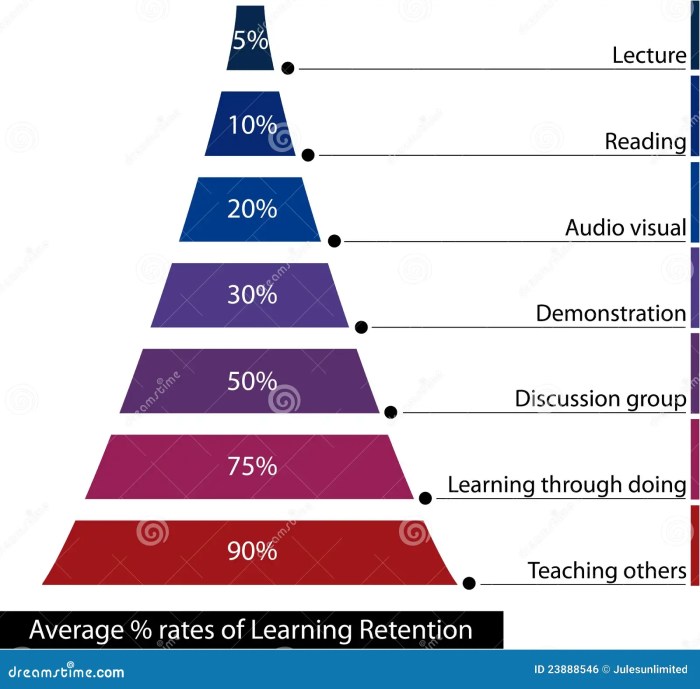
Effective learning isn’t just about absorbing information; it’s about making that information your own and using it. This final step focuses on transforming passively received knowledge into actively applied understanding, ensuring long-term retention and practical benefit. We’ll explore practical application strategies, review methods, and the powerful technique of teaching the material to others.
To truly internalize what you’ve read, you need to move beyond simple comprehension and actively engage with the material in meaningful ways. This involves identifying practical applications, regularly reviewing the information, and, perhaps most effectively, teaching it to someone else.
Practical Application of Learned Information
Connecting theoretical concepts to real-world scenarios is crucial for solidifying your understanding. Consider how the book’s principles relate to your profession, personal life, or current projects. For example, if you’ve read a book on effective communication, apply its techniques in your next team meeting or presentation. If you’ve learned about financial planning, start budgeting your expenses according to the strategies Artikeld in the book. The more you actively use the information, the stronger your memory trace becomes. Don’t just passively read about a new programming language; write a small program using the concepts you learned. The act of application itself reinforces learning.
Review and Consolidation Methods
Regular review is essential for long-term retention. Spaced repetition, in particular, has proven highly effective. This technique involves reviewing material at increasing intervals, capitalizing on the forgetting curve. Several methods facilitate this process.
| Method | Description | Pros | Cons |
|---|---|---|---|
| Flashcards | Create cards with questions on one side and answers on the other. Review regularly, focusing on cards you struggle with. | Simple, portable, cost-effective. | Can become time-consuming for large amounts of material; requires self-discipline. |
| Spaced Repetition Software (Anki, Quizlet) | These programs utilize algorithms to optimize review timing based on your performance. | Highly efficient; automatically schedules reviews; tracks progress. | Requires initial setup; reliance on technology. |
| Mind Maps | Visually organize key concepts and their relationships. Regularly review and update your mind map. | Enhances understanding through visual representation; aids in identifying gaps in knowledge. | Can be time-consuming to create initially; requires some creativity and organizational skills. |
| Summary Notes | Condense key ideas and concepts into concise notes. Review these notes periodically. | Reinforces learning through active recall; provides a quick overview of the material. | Requires careful selection of key information; may miss nuances if not done carefully. |
Teaching the Material to Others
One of the most powerful ways to consolidate your knowledge is to teach it to someone else. This forces you to articulate concepts clearly, identify areas where your understanding is weak, and adapt your explanation to different learning styles. Imagine explaining the principles of effective negotiation from your book to a friend who is preparing for a job interview. You would likely need to simplify complex ideas and use relatable examples. Conversely, explaining the same principles to a seasoned business professional would require a more nuanced and detailed approach. This process of adapting your explanation not only reinforces your own understanding but also highlights areas that need further exploration. Preparing a short presentation, even for a small audience, can be incredibly beneficial.
Conclusive Thoughts

Mastering the art of book learning is a journey, not a destination. By consistently applying active recall, engaging deeply with the text, and actively consolidating your knowledge, you’ll move beyond simple comprehension and achieve true mastery of the subject matter. Remember, the goal is not just to finish the book, but to internalize and apply its wisdom. Embrace these techniques, and watch your learning soar.