How to Optimize Your IoT Device Performance: 7 Steps – this guide delves into the crucial aspects of maximizing the efficiency and longevity of your Internet of Things devices. From understanding inherent limitations and optimizing software to mastering network configurations and bolstering security, we’ll explore practical strategies to ensure your IoT devices run smoothly and reliably.
In today’s interconnected world, IoT devices are ubiquitous, powering everything from smart homes to industrial automation. However, their performance can be significantly impacted by various factors. This guide provides a structured approach to identifying and resolving common performance bottlenecks, enabling you to unlock the full potential of your IoT infrastructure and avoid costly downtime.
Understanding Your IoT Device & its Limitations
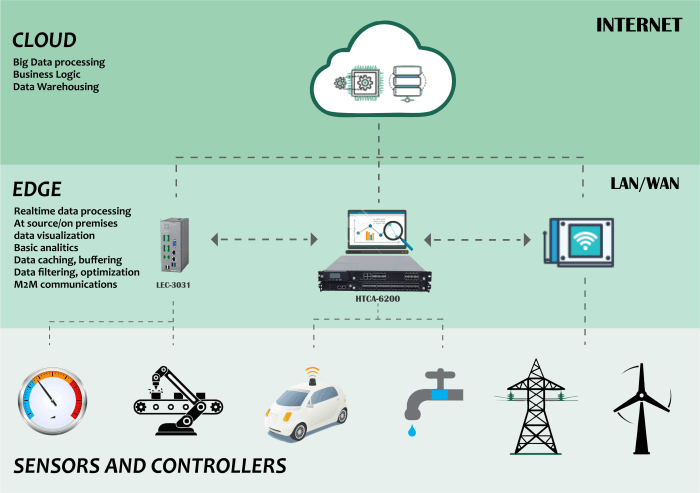
Optimizing IoT device performance begins with a thorough understanding of the device’s capabilities and inherent limitations. Ignoring these limitations can lead to frustrating performance issues and ultimately, system failure. This section will explore common bottlenecks and factors influencing performance, providing a framework for effective optimization.
Common performance bottlenecks in IoT devices often stem from a combination of resource constraints and environmental factors. These devices, by their nature, are often designed for low power consumption and small form factors, which inherently limit processing power, memory, and storage capacity. Network connectivity, particularly in challenging environments, also plays a significant role in overall performance.
Factors Influencing IoT Device Performance
Processing power, memory (both RAM and flash), and network connectivity are the primary factors influencing IoT device performance. Limited processing power restricts the ability to execute complex algorithms or handle large data volumes efficiently. Insufficient RAM can lead to slowdowns and crashes, while limited flash storage impacts the device’s ability to store data and run applications. Unreliable or low-bandwidth network connectivity creates delays and hinders data transmission, impacting real-time applications. These factors often interact; for example, a slow processor might struggle to handle data received over a high-bandwidth connection, leading to performance bottlenecks.
Real-World Performance Impact Examples
Consider a smart thermostat with limited processing power attempting to manage a complex heating and cooling system in a large building. The device might struggle to process sensor data quickly enough, leading to inaccurate temperature readings and inefficient energy use. Similarly, a security camera with insufficient memory might drop frames or experience delays in recording video, compromising its effectiveness. A remote sensor in a remote location with poor network connectivity might fail to transmit critical data in a timely manner, leading to delayed responses or missed alerts.
IoT Device Architectures and Performance
The architecture of an IoT device significantly influences its performance characteristics. Different architectures offer varying levels of processing power, memory, and energy efficiency. The table below compares three common architectures:
| Architecture | Processing Power | Memory | Network Connectivity | Typical Applications |
|---|---|---|---|---|
| Microcontroller-based | Low | Low | Often limited to low-power protocols (e.g., Bluetooth, Zigbee) | Simple sensors, wearables |
| System-on-a-Chip (SoC) | Medium to High | Medium to High | Supports various protocols (e.g., Wi-Fi, Ethernet, cellular) | Smart home devices, industrial sensors |
| Edge Computing Device | High | High | High bandwidth, often multiple connectivity options | Advanced analytics, complex data processing |
Optimizing Software & Firmware

Efficient software and firmware are crucial for maximizing the performance and longevity of your IoT device. Optimizing these components reduces resource consumption, improves responsiveness, and extends battery life – all key factors for a successful IoT deployment. This section details strategies for achieving these improvements.
Effective optimization involves a multi-faceted approach, encompassing careful code writing, efficient data handling, and the selection of appropriate programming languages. Ignoring these aspects can lead to sluggish performance, frequent crashes, and ultimately, a frustrating user experience.
Firmware Optimization for Reduced Resource Consumption
Minimizing resource usage is paramount in resource-constrained IoT environments. Techniques like code size reduction through careful programming and the use of optimized libraries are essential. Memory management is another key area; dynamic memory allocation should be used judiciously to avoid fragmentation and memory leaks. Furthermore, employing power-saving modes and scheduling tasks strategically contributes significantly to extending battery life. For example, disabling unnecessary peripherals when not in use can significantly reduce power consumption. A well-structured firmware design, prioritizing essential functions, will also improve efficiency.
Efficient Data Handling and Processing
Efficient data handling directly impacts device performance. Techniques such as data compression (e.g., using gzip or zlib) reduce the amount of data transmitted and processed, lowering bandwidth consumption and processing overhead. Batching data transmission instead of sending individual packets minimizes communication overhead. Furthermore, employing efficient data structures and algorithms (e.g., using appropriate data structures for specific tasks) ensures faster processing times. For instance, using a hash table for fast lookups instead of a linear search can drastically improve search efficiency.
Programming Language Selection and its Impact
The choice of programming language significantly affects performance. Languages like C and C++ are often preferred for IoT devices due to their low-level control and efficiency. They allow for fine-grained memory management and direct hardware interaction, leading to optimized code. However, languages like Python, while offering rapid development, may require more resources and might not be ideal for extremely resource-constrained devices. The trade-off between development speed and performance should be carefully considered based on the specific requirements of the device.
Firmware Update Process and Compatibility
Updating firmware is crucial for security and adding new features. A well-defined update process should include thorough testing of new firmware versions in a controlled environment before deployment. This minimizes the risk of introducing bugs or incompatibility issues. A robust update mechanism, incorporating error handling and rollback capabilities, is essential to ensure a smooth update process. Moreover, maintaining compatibility with existing hardware and software is critical. A detailed change log documenting updates and potential compatibility issues should be readily available to users. Regular security audits of the firmware are also essential to address potential vulnerabilities.
Network Optimization & Security

Optimizing your IoT device’s network performance is crucial for ensuring its smooth operation and preventing security vulnerabilities. A poorly configured network can lead to significant performance degradation, impacting responsiveness and data transmission reliability. Equally important is securing your device and network to protect against unauthorized access and malicious attacks. This section will explore strategies to enhance both network performance and security.
Network connectivity and reliability directly influence the effectiveness of your IoT device. Issues such as high latency, packet loss, and insufficient bandwidth can significantly impede performance. Implementing security measures, however, should not come at the cost of speed or efficiency. A balanced approach is necessary to achieve both optimal performance and robust security.
Common Network Issues Affecting IoT Device Performance
High latency, packet loss, and bandwidth limitations are prevalent challenges in IoT deployments. High latency, or the delay in data transmission, can lead to sluggish responsiveness. Packet loss, where data packets fail to reach their destination, results in incomplete data and system errors. Bandwidth limitations restrict the amount of data that can be transmitted within a given time frame, potentially hindering real-time applications. For example, a smart security camera streaming high-resolution video might experience significant performance degradation if the network bandwidth is insufficient.
Strategies for Improving Network Connectivity and Reliability
Several strategies can enhance network connectivity and reliability. Choosing the right network protocol (e.g., MQTT for low-bandwidth scenarios) is crucial. Implementing Quality of Service (QoS) mechanisms can prioritize critical data packets, reducing latency and packet loss. Regular network monitoring and testing help identify and address potential issues proactively. For instance, utilizing tools that measure latency and packet loss can pinpoint network bottlenecks. Furthermore, employing techniques like network redundancy (e.g., using multiple access points) can improve overall network reliability.
Implementing Security Measures Without Compromising Performance
Balancing security and performance often requires careful consideration. Using strong encryption protocols (like TLS/SSL) is essential but should be implemented efficiently to minimize processing overhead. Regular firmware updates patch security vulnerabilities without sacrificing functionality. Access control mechanisms, such as user authentication and authorization, should be implemented strategically to limit access to sensitive data and functionalities. For example, employing role-based access control (RBAC) can grant different users varying levels of access based on their roles.
Best Practices for Securing IoT Devices and Networks
A robust security posture is vital for protecting IoT devices and networks. This involves using strong passwords and regularly changing them. Enabling automatic software updates helps keep the device’s security software up-to-date. Implementing firewalls to control network traffic and prevent unauthorized access is a critical step. Regular security audits identify vulnerabilities and potential weaknesses. Finally, employing intrusion detection and prevention systems can detect and respond to malicious activities in real-time. These practices collectively contribute to a secure and efficient IoT ecosystem.
End of Discussion

By following these seven steps, you can significantly improve the performance and lifespan of your IoT devices. Remember that optimizing IoT performance is an ongoing process requiring consistent monitoring and adaptation. Proactive optimization not only enhances efficiency but also strengthens security, ultimately leading to a more robust and reliable IoT ecosystem.