Unlocking higher conversion rates on your landing pages requires a strategic approach. This guide delves into six crucial elements – from crafting compelling headlines and value propositions to optimizing form design and visual appeal – to help you transform your landing pages into high-performing conversion machines. We’ll explore practical techniques and best practices to enhance user experience and ultimately drive more conversions.
By focusing on these key areas, you’ll learn how to create landing pages that not only attract visitors but also effectively guide them towards desired actions. We’ll cover everything from the psychology of color choices to the optimal length of your forms, ensuring your landing pages are both aesthetically pleasing and highly effective.
Headline and Value Proposition
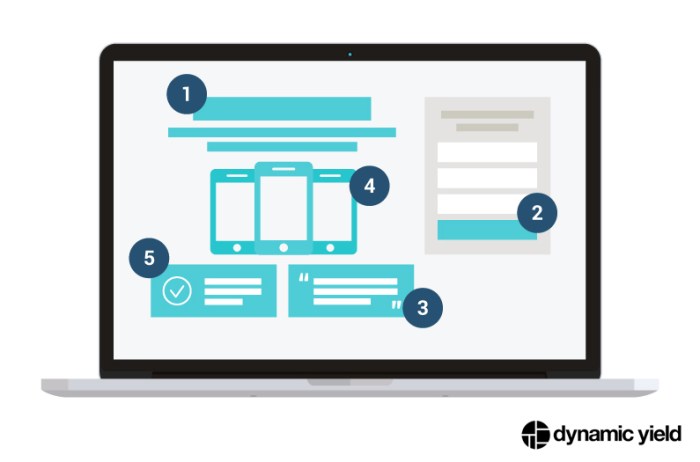
Crafting the perfect headline and value proposition is crucial for a high-converting landing page. These elements are the first impression a visitor receives, and they determine whether they’ll continue reading or bounce. A strong headline immediately captures attention, while a compelling value proposition clearly articulates the benefit for the visitor. This section will explore different headline styles and how to effectively integrate calls to action (CTAs).
A well-structured headline and value proposition work synergistically to guide visitors towards conversion. The headline acts as a hook, drawing them in, while the value proposition solidifies the benefit and encourages engagement. This combination forms the foundation of a persuasive landing page.
Headline Styles and Their Effectiveness
Three common headline styles are question headlines, benefit-driven headlines, and direct headlines. Each has its strengths and weaknesses.
Question headlines pique curiosity by posing a question relevant to the visitor’s needs. For example, “Struggling to Increase Website Conversions?” immediately addresses a common pain point. This approach can be highly effective, but it needs to be carefully crafted to avoid sounding generic or manipulative. It’s best when followed by a concise and compelling answer in the value proposition.
Benefit-driven headlines focus on the positive outcomes visitors can expect. For example, “Boost Your Sales with Optimized Landing Pages” directly highlights the reward. This approach works well because it appeals to self-interest, showcasing tangible benefits. However, if the benefit isn’t clearly demonstrated or believable, it can feel hollow.
Direct headlines are straightforward and state the topic clearly. For example, “Optimize Your Landing Pages for Higher Conversions.” This approach is simple and clear, but it may lack the punch needed to grab attention in a crowded digital landscape. Its effectiveness hinges on the overall page design and value proposition.
Incorporating Calls to Action (CTAs)
A strong CTA should be seamlessly integrated into both the headline and value proposition. It should be clear, concise, and action-oriented. For instance, a question headline (“Is Your Landing Page Underperforming?”) could be paired with a value proposition (“Discover how to boost conversions with our proven strategies – Get Your Free Guide Now!”) The CTA (“Get Your Free Guide Now!”) is embedded within the value proposition, making it immediately actionable.
Similarly, a benefit-driven headline (“Increase Leads and Revenue Today”) can be followed by a value proposition that includes a CTA: (“Learn how our landing page optimization service can transform your business results – Schedule a Free Consultation!”). The CTA (“Schedule a Free Consultation!”) is again integrated naturally, guiding the visitor towards the desired action.
Even direct headlines can benefit from integrated CTAs. A direct headline (“Landing Page Optimization Services”) can be followed by a value proposition like this: (“Get expert help to design high-converting landing pages – Contact Us Today for a Free Quote!”). The CTA (“Contact Us Today for a Free Quote!”) provides a clear next step. The key is to ensure the CTA is relevant, compelling, and easily visible.
Visual Elements and Design
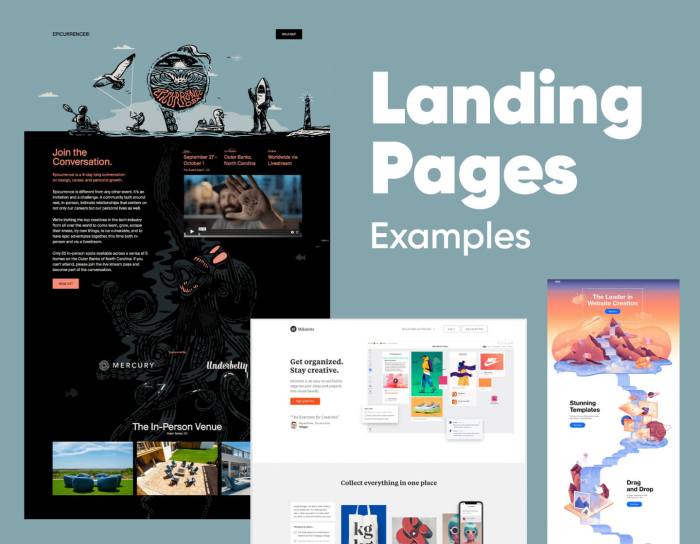
A compelling visual design is paramount for a high-converting landing page. It’s not just about aesthetics; visuals directly influence user engagement, understanding, and ultimately, conversion rates. A well-designed page guides the user’s eye, clarifies the value proposition, and builds trust. Conversely, a poorly designed page can lead to confusion, frustration, and ultimately, abandonment.
High-quality images and videos significantly impact landing page conversions. They break up text, making the page more visually appealing and digestible. More importantly, they can vividly communicate your brand’s message and the benefits of your product or service. For example, a landing page selling artisanal coffee could feature high-resolution images of the beans, the roasting process, and the final brewed product, appealing to the senses and building trust in the product’s quality. A video showcasing happy customers enjoying the coffee would further enhance this effect. Conversely, blurry, low-resolution images or generic stock photos can damage credibility and reduce conversions.
Visual Hierarchy in Landing Page Design
Creating a visually appealing layout hinges on establishing a clear visual hierarchy. This involves guiding the user’s eye through the page in a logical and intuitive manner, leading them to the desired action (e.g., signing up, making a purchase). This is achieved through the strategic use of size, color, contrast, and whitespace.
A step-by-step guide to designing a visually appealing landing page layout using principles of visual hierarchy involves:
- Identify the focal point: This is usually the primary call to action (CTA) button or the most important piece of information. Make it visually dominant using size, color, and placement.
- Create visual pathways: Use elements like lines, arrows, or even the arrangement of elements to guide the user’s eye from the top of the page to the CTA.
- Prioritize content: Use different font sizes and weights to distinguish headings, subheadings, and body text. Larger, bolder text indicates higher importance.
- Use consistent visual cues: Maintain consistency in typography, color palettes, and image styles throughout the page to create a cohesive and professional look.
- Test and iterate: A/B testing different layouts can reveal which design elements are most effective at driving conversions.
Effective Use of Whitespace
Whitespace, or negative space, is the empty area surrounding text and images. It’s crucial for improving readability and user experience. Overcrowding a landing page with too much content and too few visual breaks makes it difficult to read and navigate. Whitespace provides visual breathing room, making the content more digestible and improving overall aesthetics. For example, ample whitespace around a CTA button makes it stand out and encourages clicks. Consider the use of margins, padding, and spacing between elements to effectively utilize whitespace.
Color Psychology in Landing Page Design
Color psychology plays a significant role in influencing user emotions and behavior. Different colors evoke different feelings and associations. Choosing the right color palette is essential for creating a landing page that aligns with your brand and resonates with your target audience.
For example, a landing page for a financial institution might use shades of blue to convey trust and stability. A landing page for a tech startup might use vibrant colors like orange or green to convey innovation and energy. A landing page for a luxury brand might use sophisticated colors like gold or deep purple to communicate elegance and exclusivity. Choosing colors that align with your brand’s identity and target audience’s preferences can significantly enhance conversions.
Epilogue
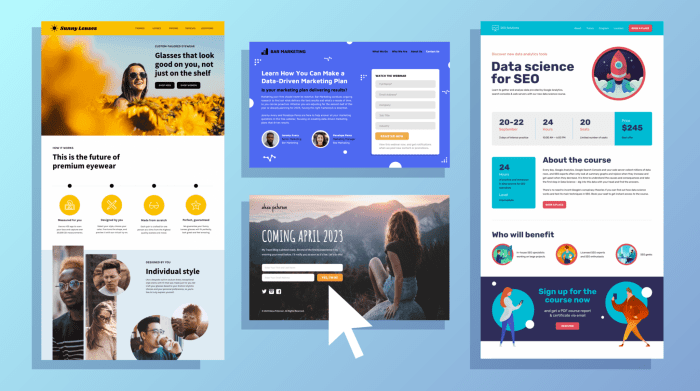
Mastering the art of landing page optimization is an ongoing process, but by focusing on these six essential elements – compelling headlines, user-friendly forms, visually engaging design, and strategic calls to action – you can significantly boost your conversion rates. Remember, continuous testing and refinement are key to achieving optimal results. Implement these strategies, analyze your data, and watch your conversions soar.