Unlocking the full potential of your machine learning models often hinges on optimization. Achieving high accuracy isn’t simply about choosing the right algorithm; it demands a multifaceted approach encompassing data preparation, model selection, and advanced techniques. This guide explores four key strategies to significantly improve your model’s predictive power and reliability, transforming raw data into insightful predictions.
We’ll delve into practical methods for data preprocessing, including handling missing values and outliers, and exploring feature scaling techniques. Then, we’ll navigate the complexities of model selection, hyperparameter tuning, and the crucial role of cross-validation. Finally, we’ll uncover the power of ensemble methods and regularization to refine your model’s accuracy and generalization capabilities. By the end, you’ll possess a robust toolkit for building superior machine learning models.
Data Preprocessing Techniques for Enhanced Model Accuracy
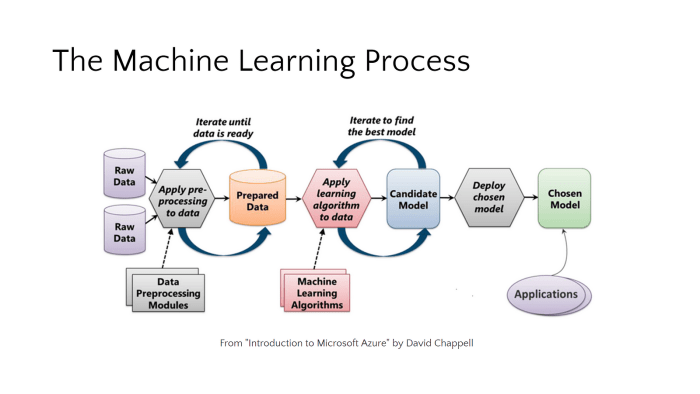
Data preprocessing is a crucial step in the machine learning pipeline, significantly impacting the accuracy and performance of your model. Clean, consistent, and appropriately scaled data allows algorithms to learn patterns more effectively, leading to more reliable predictions. Ignoring this stage often results in poor model generalization and inaccurate results. This section details several key techniques for enhancing data quality and preparing it for model training.
Data Cleaning Methods
Effective data cleaning involves identifying and addressing inconsistencies, errors, and missing values within your dataset. These issues can severely hamper a model’s ability to learn meaningful patterns. Several techniques are available to handle these problems, each with its own strengths and weaknesses. The following table summarizes some common approaches:
| Method | Advantages | Disadvantages | Example Use Cases |
|---|---|---|---|
| Missing Value Imputation (Mean/Median/Mode) | Simple, fast, and easy to implement. | Can distort the distribution of the data, especially with small datasets or significant missingness. May not be appropriate for non-linear relationships. | Filling in missing ages in a customer dataset with the average age. |
| K-Nearest Neighbors Imputation | Considers relationships between data points to estimate missing values. | Computationally more expensive than simpler methods. Performance depends on the choice of ‘k’. | Imputing missing values in a sensor dataset based on values from similar sensor readings. |
| Outlier Removal (Trimming/Winsorizing) | Reduces the influence of extreme values that can skew model training. | Can lead to loss of potentially valuable information. The choice of threshold for outlier detection can be subjective. | Removing extreme values from a dataset of house prices to avoid bias in a regression model. |
| Data Transformation (Log Transformation) | Transforms skewed data into a more normal distribution, improving model performance. | Can make interpretation of results more complex. May not be suitable for all types of data. | Transforming income data, which is often right-skewed, before using it in a linear regression model. |
Feature Scaling Techniques
Feature scaling involves transforming the features of your dataset to a similar range of values. This is crucial because many machine learning algorithms are sensitive to the scale of the input features. Algorithms like k-Nearest Neighbors and Support Vector Machines are particularly affected by unscaled features. Scaling ensures that no single feature dominates the model’s learning process, leading to more balanced and accurate predictions.
The following are some common feature scaling techniques:
- Standardization (Z-score normalization): Transforms data to have a mean of 0 and a standard deviation of 1. This is achieved using the formula: z = (x – μ) / σ, where x is the original value, μ is the mean, and σ is the standard deviation.
- Normalization (Min-Max scaling): Transforms data to a range between 0 and 1. This is achieved using the formula: x’ = (x – min) / (max – min), where x is the original value, min is the minimum value, and max is the maximum value.
- Differences between Standardization and Normalization:
- Standardization uses the mean and standard deviation, resulting in a normal distribution with a mean of 0 and a standard deviation of 1. It is less sensitive to outliers.
- Normalization scales data to a specific range (typically 0-1), preserving the original distribution. It is more sensitive to outliers.
- The choice between standardization and normalization depends on the specific dataset and the algorithm used. Standardization is often preferred for algorithms that assume a normal distribution, while normalization is useful when the range of the data is important.
Data Preprocessing Flowchart
A systematic approach to data preprocessing is crucial. The following flowchart illustrates the typical steps involved:
[Imagine a flowchart here. The flowchart would begin with “Raw Data,” then branch to “Data Cleaning” (handling missing values, outliers, inconsistencies), followed by “Feature Engineering” (creating new features, transforming existing ones), then “Feature Scaling” (standardization, normalization), and finally leading to “Preprocessed Data” ready for model training. Each step would be clearly labeled, showing the flow from one stage to the next.]
Model Selection and Hyperparameter Tuning for Optimal Performance
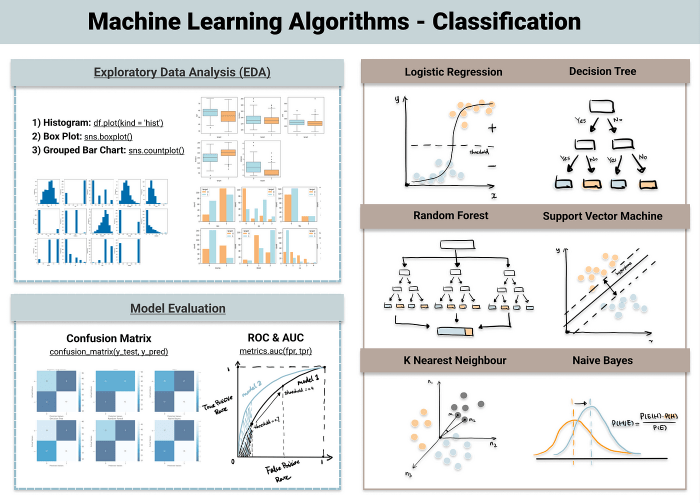
Choosing the right machine learning algorithm and fine-tuning its parameters are crucial steps in building accurate and efficient models. The performance of a model is heavily influenced by both the algorithm’s inherent capabilities and the specific settings used. This section explores model selection for regression tasks and provides a practical guide to hyperparameter tuning.
Comparison of Regression Algorithms
Selecting the appropriate algorithm depends on the characteristics of your dataset and the desired level of model complexity. Three common algorithms for regression are Linear Regression, Support Vector Regression (SVR), and Random Forest Regression. Each offers unique strengths and weaknesses.
| Algorithm | Computational Complexity | Accuracy Potential | Suitability for Dataset Size | Strengths | Weaknesses |
|---|---|---|---|---|---|
| Linear Regression | O(n) | Moderate | Excellent for smaller to medium datasets | Simple, interpretable, computationally efficient. | Assumes linear relationship between variables; sensitive to outliers; may underfit complex data. |
| Support Vector Regression (SVR) | O(n2) to O(n3) | High | Can handle larger datasets with kernel tricks but computationally expensive for very large datasets. | Effective in high-dimensional spaces; robust to outliers; can model non-linear relationships using kernel functions. | Computationally expensive for large datasets; parameter tuning can be challenging. |
| Random Forest Regression | O(n log n) | High | Scales well to large datasets | Robust to outliers; handles non-linear relationships well; less prone to overfitting than individual decision trees. | Can be less interpretable than linear regression; computationally more expensive than linear regression. |
Hyperparameter Tuning and Cross-Validation
Hyperparameters are settings that control the learning process of a machine learning algorithm, but are not learned directly from the data. Examples include the learning rate in gradient descent or the number of trees in a random forest. Finding the optimal hyperparameter settings is crucial for maximizing model performance. Cross-validation is a powerful technique to evaluate a model’s performance across different hyperparameter settings and prevent overfitting. It involves splitting the data into multiple folds, training the model on some folds and evaluating it on the remaining folds. This process is repeated for each fold, providing a more robust estimate of the model’s generalization performance.
Hyperparameter Tuning with Grid Search
Grid search is a systematic approach to hyperparameter tuning. It involves defining a grid of hyperparameter values and training and evaluating the model for each combination. The combination yielding the best performance is then selected.
- Define the hyperparameter search space: Specify the range of values for each hyperparameter you want to tune. For example, for a random forest, you might consider the number of trees (e.g., 10, 50, 100, 200), maximum depth (e.g., 3, 5, 10), and minimum samples per leaf (e.g., 1, 5, 10).
- Choose a cross-validation strategy: k-fold cross-validation is commonly used. This involves splitting the dataset into k folds, training on k-1 folds, and testing on the remaining fold. This process is repeated k times, with each fold serving as the test set once.
- Train and evaluate the model for each hyperparameter combination: For each combination of hyperparameters in your grid, train the model using the training folds and evaluate its performance on the test fold using a suitable metric (e.g., mean squared error for regression).
- Select the best hyperparameter combination: Choose the combination that yields the best cross-validated performance. This is typically the average performance across all k folds.
Interpreting Learning Curves
A learning curve plots the model’s performance (e.g., training error and validation error) against the amount of training data. It’s a valuable tool for diagnosing underfitting and overfitting.
An example of an underfitting learning curve would show both training and validation errors being high and relatively flat, indicating the model is too simple to capture the underlying patterns in the data. Addressing this might involve using a more complex model, adding more features, or using a different algorithm.
Conversely, an overfitting learning curve would show low training error but high validation error. The gap between the two curves indicates overfitting, where the model is learning the noise in the training data rather than the underlying patterns. To mitigate overfitting, consider techniques like regularization, increasing the amount of training data, or using a simpler model. A well-fitting model would show both training and validation errors converging to a low value.
Advanced Techniques for Improving Model Accuracy
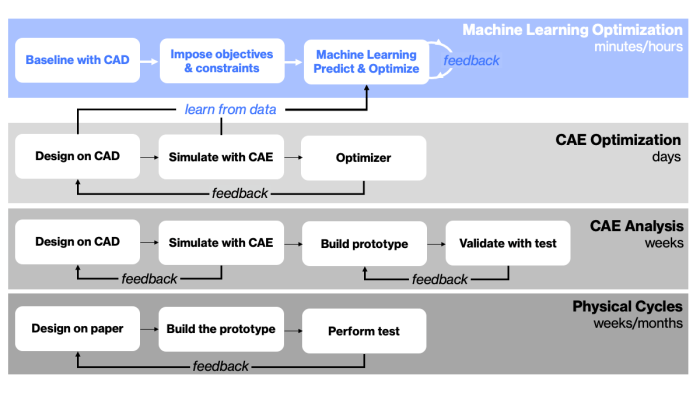
Beyond basic data preprocessing and model selection, several advanced techniques can significantly boost a machine learning model’s accuracy. These methods often address issues like overfitting and the limitations of individual algorithms, leading to more robust and reliable predictions. This section explores ensemble methods and regularization techniques, providing practical examples and strategies for implementation.
Ensemble Methods: Bagging and Boosting
Ensemble methods combine multiple models to create a more accurate and stable predictor than any single constituent model. Bagging and boosting are two prominent approaches. Bagging, or bootstrap aggregating, trains multiple models on different subsets of the training data, then averages their predictions. This reduces variance and improves generalization. Boosting, conversely, sequentially trains models, each focusing on correcting the errors of its predecessors. This leads to a strong focus on difficult-to-classify instances.
Popular examples of bagging algorithms include Random Forest, which builds multiple decision trees on bootstrapped samples and averages their predictions, and Bagged Decision Trees, a simpler version using the same core principle. Boosting algorithms include AdaBoost, which assigns weights to data points based on their difficulty, and Gradient Boosting Machines (GBMs) like XGBoost, LightGBM, and CatBoost, which iteratively fit trees to the residuals of previous models. These algorithms are highly effective in many applications, but can be computationally expensive, especially with large datasets.
Regularization Techniques: L1 and L2
Regularization techniques are crucial for preventing overfitting, a situation where a model performs exceptionally well on training data but poorly on unseen data. This is achieved by adding a penalty term to the model’s loss function, discouraging overly complex models. L1 (LASSO) and L2 (Ridge) regularization are common methods.
The key differences between L1 and L2 regularization are:
- L1 regularization adds a penalty proportional to the absolute value of the model’s coefficients. This can lead to sparse models, where some coefficients are exactly zero, effectively performing feature selection.
- L2 regularization adds a penalty proportional to the square of the model’s coefficients. This shrinks the coefficients towards zero but rarely sets them to exactly zero.
- L1 is more robust to outliers than L2.
- L2 generally leads to smoother models and better generalization on larger datasets.
The choice between L1 and L2 often depends on the specific dataset and model. Experimentation and cross-validation are key to determining the optimal regularization strength (the hyperparameter controlling the penalty term).
Addressing Underperforming Models: A Case Study
Consider a scenario where a linear regression model is predicting house prices. The model achieves a high R-squared on the training data but performs poorly on a held-out test set, indicating significant overfitting. The Mean Absolute Error (MAE) on the test set is unacceptably high.
To address this underperformance, a multi-pronged approach is recommended:
- Feature Engineering: Explore additional relevant features, such as proximity to schools, crime rates, or property tax rates. Transform existing features, for example, by creating interaction terms or using polynomial transformations.
- Regularization: Implement L1 or L2 regularization to constrain the model’s complexity and reduce overfitting. Experiment with different regularization strengths using cross-validation to find the optimal value.
- Model Selection: Consider alternative models, such as Support Vector Regression (SVR) or Random Forest Regression, which might be better suited to capture the non-linear relationships in the data.
- Data Cleaning and Preprocessing: Re-examine the data for outliers or missing values that might be affecting the model’s performance. Impute missing values or remove outliers using appropriate techniques.
- Ensemble Methods: Explore ensemble methods like bagging or boosting to combine predictions from multiple models and improve overall accuracy and robustness.
By systematically applying these techniques and carefully monitoring the model’s performance on a held-out test set, the predictive capability can be substantially enhanced. Iterative refinement and experimentation are crucial for achieving optimal results.
Closing Notes

Optimizing machine learning models is an iterative process demanding careful attention to detail. By mastering data preprocessing, selecting appropriate algorithms, fine-tuning hyperparameters, and employing advanced techniques like ensemble methods and regularization, you can significantly enhance your model’s accuracy and reliability. This guide provides a solid foundation for building high-performing models capable of extracting meaningful insights from your data, leading to more effective and impactful solutions.