Juggling academics, extracurriculars, and a social life can feel overwhelming. Effective time management isn’t just about cramming; it’s about strategic planning and mindful execution. This guide unveils nine proven study hacks designed to help students conquer their schedules and achieve academic success without sacrificing their well-being. We’ll explore techniques ranging from time blocking and prioritization strategies to optimizing your study environment and building sustainable study habits.
From mastering the Pomodoro Technique to breaking down large assignments into manageable chunks, we’ll provide practical tools and actionable steps to transform your approach to studying. Learn how to identify and eliminate distractions, personalize your study plan to match your learning style, and incorporate essential breaks and physical activity to maintain focus and prevent burnout. By the end, you’ll possess a comprehensive toolkit for reclaiming your time and maximizing your academic potential.
Effective Time Blocking Techniques for Students

Effective time management is crucial for academic success. Time blocking, a technique that involves scheduling specific tasks within designated time slots, offers a structured approach to maximizing productivity and minimizing stress. By allocating time for classes, studying, extracurricular activities, and personal time, students can create a balanced schedule that promotes both academic achievement and well-being. This structured approach helps to avoid the pitfalls of procrastination and encourages a proactive approach to managing one’s day.
Designing a Weekly Schedule Using Time Blocking
Creating a weekly schedule using time blocking involves allocating specific time slots for various activities. A well-designed schedule considers the varying demands of academic life, including classes, study sessions, extracurricular commitments, and personal time for relaxation and rejuvenation. The following table provides a sample weekly schedule, but individual schedules should be customized based on personal needs and commitments.
| Day | Time | Activity | Priority |
|---|---|---|---|
| Monday | 8:00 AM – 9:00 AM | Calculus Lecture | High |
| Monday | 9:00 AM – 10:00 AM | Calculus Problem Set | High |
| Monday | 10:00 AM – 12:00 PM | Chemistry Lab | High |
| Monday | 12:00 PM – 1:00 PM | Lunch | Medium |
| Monday | 1:00 PM – 3:00 PM | History Seminar | High |
| Monday | 3:00 PM – 4:00 PM | Free Time/Exercise | Medium |
| Monday | 4:00 PM – 6:00 PM | Study Group (History) | High |
| Monday | 6:00 PM – 7:00 PM | Dinner | Medium |
| Monday | 7:00 PM – 9:00 PM | Free Time/Relaxation | Low |
Comparing the Pomodoro Technique and the Eisenhower Matrix
The Pomodoro Technique and the Eisenhower Matrix are two distinct but complementary time management strategies. The Pomodoro Technique focuses on focused work intervals interspersed with short breaks, promoting concentration and preventing burnout. The Eisenhower Matrix, also known as the Urgent-Important Matrix, prioritizes tasks based on their urgency and importance, helping individuals focus on high-impact activities.
The Pomodoro Technique can be applied to studying by allocating 25-minute study blocks followed by 5-minute breaks. For example, a student might use this technique to focus intensely on a challenging chapter in their textbook for 25 minutes before taking a short break to stretch or grab a snack. This cycle can be repeated several times, with longer breaks after each four “pomodoros.”
The Eisenhower Matrix helps students prioritize their tasks. For instance, a student might identify an upcoming exam as both urgent and important, placing it at the top of their to-do list. Meanwhile, a less urgent task, such as reading a supplementary article, might be scheduled for a less busy time. Using the Eisenhower Matrix ensures that crucial tasks are addressed first, preventing last-minute rushes and improving overall time management.
Benefits of Time Blocking and Strategies to Prevent Schedule Slippage
Time blocking offers several benefits for students. It reduces procrastination by providing a clear structure for the day, encouraging proactive task completion rather than reactive firefighting. It improves focus by minimizing distractions and allocating dedicated time for specific tasks. The predictability of a well-structured schedule reduces stress and anxiety associated with juggling multiple responsibilities.
To prevent schedule slippage, it is crucial to build in buffer time between activities, account for unexpected delays, and regularly review and adjust the schedule as needed. Flexibility is key; if a task takes longer than anticipated, it’s important to adjust subsequent tasks or reschedule them. Regular self-reflection on the effectiveness of the schedule and making necessary modifications ensures its ongoing relevance and usefulness. Utilizing a digital calendar with reminders can also significantly aid in maintaining schedule adherence.
Prioritization and Task Management Strategies
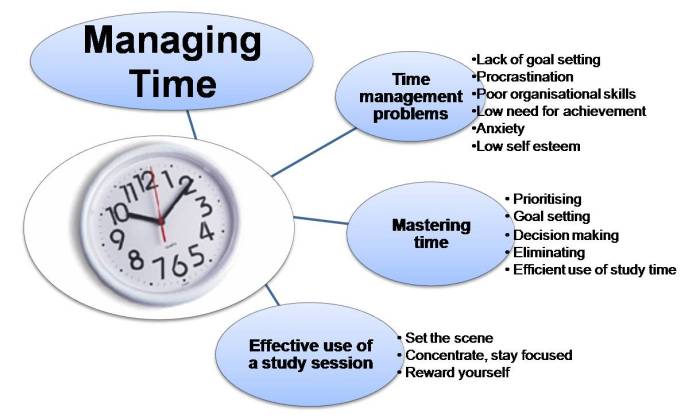
Effective time management for students hinges on the ability to prioritize tasks and manage them efficiently. This involves understanding your workload, identifying the most crucial assignments, and breaking them down into manageable steps. Failing to prioritize can lead to feeling overwhelmed, missed deadlines, and ultimately, lower academic performance. This section will explore various prioritization methods and strategies for breaking down large assignments.
Prioritization methods help students focus their efforts on the most important tasks first, maximizing productivity and minimizing stress. Choosing the right method depends on individual preferences and the nature of the workload. Different methods offer unique advantages and disadvantages, so experimenting to find the best fit is crucial.
Prioritization Methods
Several methods exist for prioritizing tasks. Each has its own strengths and weaknesses, making the choice a matter of personal preference and task characteristics.
- Eisenhower Matrix (Urgent/Important): This method categorizes tasks based on urgency and importance. Urgent and important tasks are tackled immediately; important but not urgent tasks are scheduled; urgent but not important tasks are delegated if possible; and neither urgent nor important tasks are eliminated.
- Advantages: Clear categorization, helps focus on high-impact tasks.
- Disadvantages: Can be subjective in determining urgency and importance; requires regular review and updating.
- MoSCoW Method: This method categorizes tasks as Must have, Should have, Could have, and Won’t have. This allows for prioritization based on necessity and feasibility.
- Advantages: Provides a structured approach, helps manage expectations.
- Disadvantages: Requires careful consideration and potentially difficult choices about what to exclude.
- Pareto Principle (80/20 Rule): This principle suggests that 80% of results come from 20% of efforts. Focus on the 20% of tasks that yield the most significant results.
- Advantages: Focuses efforts on high-impact activities, improves efficiency.
- Disadvantages: Can be challenging to accurately identify the most impactful 20%; may neglect important but less impactful tasks.
- Value vs. Effort Matrix: This method plots tasks based on their value and the effort required to complete them. High-value, low-effort tasks are prioritized.
- Advantages: Provides a visual representation of task prioritization, aids in strategic decision-making.
- Disadvantages: Requires accurate estimation of value and effort; subjective estimations can lead to inaccurate prioritization.
- Simple Prioritization by Deadline: This involves simply ordering tasks by their deadlines, starting with the closest deadline first.
- Advantages: Simple and easy to understand; prevents missing deadlines.
- Disadvantages: Doesn’t account for task importance or complexity; may lead to neglecting important long-term tasks.
Breaking Down Large Assignments
Large assignments can feel overwhelming, but breaking them into smaller, manageable tasks makes them less daunting and more achievable. This step-by-step guide demonstrates how to do this for various academic assignments.
- Identify the overall goal and requirements: Clearly understand the assignment’s objective, length, and specific instructions.
- Create a detailed Artikel or plan: Break the assignment into logical sections or phases. For an essay, this might involve brainstorming, researching, outlining, drafting, revising, and editing. For a research paper, it could include literature review, hypothesis formulation, data collection, analysis, and writing. For a presentation, it might involve topic selection, research, scriptwriting, slide design, and rehearsal.
- Set smaller, achievable deadlines for each task: Assign realistic deadlines to each section of the Artikel. This creates smaller, manageable goals that build towards the final submission.
- Allocate time for each task: Estimate the time needed for each smaller task and schedule it into your timetable.
- Regularly review and adjust your plan: As you progress, assess your progress and adjust deadlines or task allocation as needed. Flexibility is key.
Example: Essay on the impact of social media: The large task “Write a 10-page essay on the impact of social media” can be broken down into: Research (2 days), Artikel (1 day), Draft introduction (1 day), Draft body paragraphs (3 days), Draft conclusion (1 day), Revise and edit (2 days).
Example: Research paper on climate change: The large task “Write a 20-page research paper on climate change” can be broken down into: Literature review (5 days), Hypothesis formulation (1 day), Data collection (7 days), Data analysis (5 days), Results interpretation (2 days), Paper writing (5 days).
Example: Presentation on the history of the internet: The large task “Create a 15-minute presentation on the history of the internet” can be broken down into: Topic research (3 days), Scriptwriting (2 days), Slide design (2 days), Rehearsal (2 days).
Setting Realistic Goals and Deadlines
Setting realistic goals and deadlines is crucial for effective time management. Unrealistic expectations lead to stress and procrastination. Adjusting goals when unexpected events occur is equally important for maintaining progress and avoiding burnout.
To set realistic goals, consider your current workload, available time, and the complexity of the task. Break down large goals into smaller, manageable steps with specific deadlines. For instance, instead of aiming to “finish the research paper,” set smaller goals like “complete literature review by [date],” “collect data by [date],” and “write the introduction by [date]”.
When unexpected events occur (illness, family emergencies, etc.), reassess your goals and deadlines. Prioritize tasks, delegate if possible, and communicate with instructors to request extensions if needed. For example, if illness delays your progress, you might need to adjust your daily study schedule or request an extension for an assignment.
Optimizing Study Environment and Habits

Creating a productive study environment and cultivating effective study habits are crucial for academic success. These elements significantly impact your ability to focus, retain information, and ultimately, achieve your academic goals. By addressing common distractions, tailoring your study approach to your learning style, and incorporating regular breaks and physical activity, you can significantly enhance your learning experience.
Minimizing Study Environment Distractions
Distractions significantly hinder concentration and reduce study efficiency. Three common culprits are electronic devices, noisy environments, and uncomfortable physical spaces. To mitigate their impact, implementing specific strategies is vital.
- Electronic Devices: The allure of social media, emails, and games can be overwhelming. To minimize this distraction, designate specific times for checking these devices, ideally during scheduled breaks. Consider using website blockers or app timers to limit access during study periods. Turning your phone to “Do Not Disturb” mode can also be helpful.
- Noisy Environments: Background noise, whether from roommates, traffic, or construction, can disrupt concentration. Identify quiet study spaces such as libraries, study rooms, or even a designated quiet corner at home. If complete silence is unattainable, consider using noise-canceling headphones or listening to ambient soundscapes designed to promote focus.
- Uncomfortable Physical Space: An uncomfortable chair, poor lighting, or excessive clutter can create physical discomfort and mental distraction. Ensure your study space is well-lit, ergonomically sound, and organized. A clutter-free environment promotes a clearer mind and reduces visual distractions. Consider investing in a comfortable chair and ensuring proper desk height.
Creating a Personalized Study Plan
A personalized study plan considers individual learning styles and preferences, maximizing learning efficiency. Understanding your learning style allows you to tailor your study techniques for optimal results.
| Learning Style | Study Techniques |
|---|---|
| Visual | Using diagrams, mind maps, flashcards, and colorful notes. Watching videos and presentations. |
| Auditory | Listening to lectures, audio recordings, and discussions. Explaining concepts aloud. |
| Kinesthetic | Engaging in hands-on activities, experiments, and role-playing. Taking frequent breaks and moving around. |
| Reading/Writing | Reading textbooks, articles, and taking detailed notes. Summarizing key concepts in writing. |
Incorporating Regular Breaks and Physical Activity
Regular breaks and physical activity are not distractions; they are essential components of effective studying. They prevent burnout, improve focus, and enhance cognitive function.
Short, frequent breaks are more effective than one long break. The Pomodoro Technique, for instance, involves 25 minutes of focused study followed by a 5-minute break. This structured approach prevents mental fatigue and maintains concentration. Incorporating physical activity, such as a brisk walk or a short exercise session, during breaks can further enhance focus and reduce stress. Even simple stretches at your desk can help.
Closing Summary

Mastering time management as a student is a journey, not a destination. By implementing the strategies Artikeld – from effective time blocking and prioritization to optimizing your study environment and cultivating healthy habits – you’ll not only improve your academic performance but also cultivate a more balanced and fulfilling student experience. Remember that consistency is key; start small, track your progress, and adapt your techniques as needed. Embrace the process, and watch your productivity soar.