Unlocking the true potential of your website hinges on understanding its performance. This guide delves into the crucial world of website analytics, focusing on four key metrics that directly impact your online success. We’ll explore how to track, interpret, and leverage these metrics to drive improvements in user engagement, conversion rates, and ultimately, your business objectives. By mastering these analytical tools, you can transform your website from a passive presence into a dynamic, high-performing asset.
We will dissect traffic sources, analyze user behavior, and uncover actionable strategies for optimizing your website’s performance. From understanding bounce rates and session durations to identifying your most effective traffic channels, this guide provides a practical framework for data-driven decision-making. Prepare to gain a clearer picture of your website’s strengths and weaknesses, paving the way for targeted improvements and measurable results.
Understanding Key Website Performance Indicators
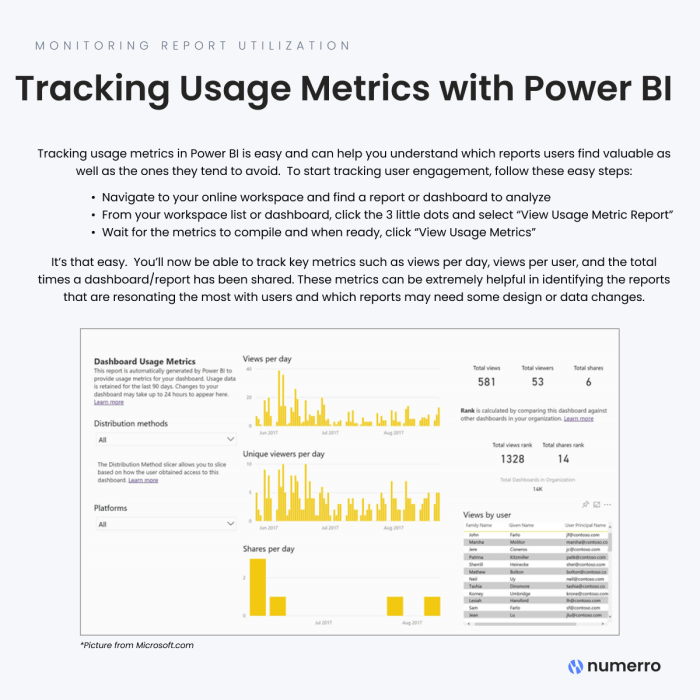
Understanding key website performance indicators (KPIs) is crucial for optimizing your online presence and achieving your business goals. By tracking and analyzing these metrics, you can gain valuable insights into user behavior, identify areas for improvement, and ultimately drive better results. This section will delve into four critical KPIs: website traffic, bounce rate, average session duration, and conversion rate.
Website Traffic and Business Goals
Website traffic, the total number of visitors to your site, directly impacts your business success. High traffic volume generally translates to increased brand awareness, lead generation, and ultimately, sales. However, simply having high traffic isn’t enough; the quality of that traffic is equally important. Targeted traffic, consisting of users who are genuinely interested in your products or services, is far more valuable than a large volume of irrelevant visitors. For example, a company selling luxury watches would benefit more from 1000 visitors actively searching for high-end timepieces than 10,000 visitors browsing unrelated topics. Analyzing traffic sources (e.g., organic search, social media, paid advertising) helps identify the most effective channels for acquiring valuable customers.
Bounce Rate and User Experience
Bounce rate represents the percentage of visitors who leave your website after viewing only one page. A high bounce rate indicates a problem with user experience, suggesting that your website isn’t meeting visitor expectations or providing the information they seek. Several factors contribute to high bounce rates, including poor website design, slow loading speeds, irrelevant content, and broken links. For instance, a landing page with confusing navigation or a poorly written headline might lead to a high bounce rate as users quickly decide the page isn’t relevant to their needs. Lowering your bounce rate requires focusing on improving website design, content quality, and overall user experience.
Improving Average Session Duration and User Engagement
Average session duration measures the average time visitors spend on your website. A longer session duration suggests higher user engagement and interest in your content. Strategies for improving this metric include creating engaging and valuable content, optimizing website navigation, and incorporating interactive elements such as videos, quizzes, or polls. For example, a blog with well-written, informative articles, supplemented by engaging visuals and interactive elements, is more likely to keep visitors on the site longer than a page with just plain text. Increasing average session duration often correlates with higher conversion rates as engaged users are more likely to complete desired actions.
Comparison of Key Website Performance Indicators
The following table compares four key website performance indicators, highlighting their strengths and weaknesses in website optimization:
| Metric | Strengths | Weaknesses | Optimization Focus |
|---|---|---|---|
| Website Traffic | Indicates overall reach and brand awareness; helps identify effective marketing channels. | Doesn’t necessarily reflect engagement or conversions; can be misleading if traffic is low-quality. | Increase traffic from targeted sources; improve website visibility and . |
| Bounce Rate | Highlights issues with user experience and content relevance; helps identify areas needing improvement. | Doesn’t directly measure conversions; a low bounce rate doesn’t guarantee conversions. | Improve website design, content quality, and page loading speed; ensure clear calls to action. |
| Average Session Duration | Indicates user engagement and interest in content; often correlates with higher conversion rates. | Doesn’t directly measure conversions; can be inflated by users passively browsing. | Create engaging and valuable content; optimize website navigation and structure; incorporate interactive elements. |
| Conversion Rate | Directly measures the success of your website in achieving specific goals (e.g., sales, lead generation). | Doesn’t provide insights into user behavior or website usability issues. | Optimize landing pages; improve calls to action; streamline the conversion process. |
Analyzing Website Traffic Sources and Behavior

Understanding where your website traffic originates and how users interact with your site is crucial for optimization. Analyzing traffic sources and user behavior allows for targeted improvements to content, marketing strategies, and overall website design, ultimately leading to increased conversions and improved user experience. This section will delve into the different types of website traffic, methods for identifying effective sources, and analyzing behavioral differences between user segments.
Different Types of Website Traffic and Their Significance
Website traffic can be broadly categorized into four main types: organic, paid, referral, and direct. Each source provides valuable insights into user acquisition and engagement. Organic traffic, driven by unpaid search engine optimization () efforts, indicates the effectiveness of your content and strategy in attracting users naturally. Paid traffic, generated through advertising campaigns like Google Ads or social media ads, represents a direct investment in user acquisition and allows for precise targeting. Referral traffic originates from links on other websites, reflecting the effectiveness of your outreach and partnerships. Finally, direct traffic consists of users who type your website address directly into their browser, suggesting brand recognition and returning visitors. Understanding the proportion of traffic from each source is key to allocating resources effectively.
Identifying the Most Effective Traffic Sources
Identifying the most effective traffic sources requires a multifaceted approach. Google Analytics, for example, provides detailed reports on traffic acquisition channels, allowing you to compare the performance of different sources based on key metrics like conversion rates, bounce rates, and average session duration. By analyzing these metrics, you can pinpoint which channels are driving the most valuable traffic. For instance, a high conversion rate from a specific referral source might indicate a successful partnership, while a low bounce rate from organic traffic suggests high-quality content that resonates with the target audience. Further investigation might involve analyzing performance for organic traffic or campaign performance data for paid traffic to optimize resource allocation.
Comparing and Contrasting User Behavior from Different Traffic Sources
Users from different traffic sources often exhibit distinct behaviors. Organic traffic, typically driven by users actively searching for specific information, may demonstrate higher engagement and lower bounce rates compared to paid traffic, which might include users with less targeted intent. Referral traffic, often coming from related websites or content, might display higher levels of interest in specific products or services. Direct traffic, representing returning users or those with strong brand awareness, might have shorter session durations but higher conversion rates. Understanding these behavioral differences is vital for tailoring content and user experience to resonate with each segment. For example, you might design more in-depth content for organic traffic and more concise, product-focused content for paid traffic.
Segmenting Website Traffic Based on Demographics and Behavior
Effective segmentation allows for personalized experiences and targeted marketing efforts.
- Define your segmentation criteria: Determine the key demographic and behavioral attributes you want to track, such as age, location, device type, interests, and engagement metrics (e.g., bounce rate, pages per visit, time on site).
- Utilize Google Analytics features: Leverage Google Analytics’ audience segmentation tools to create custom segments based on your defined criteria. This allows you to analyze the behavior of specific user groups.
- Analyze segment performance: Compare the performance of different segments across key metrics to identify opportunities for improvement. For example, a segment showing a high bounce rate might require content optimization.
- Implement personalized experiences: Based on your analysis, tailor content, messaging, and website design to resonate with specific user segments. This could involve A/B testing different versions of your website for different segments.
- Continuously monitor and refine: Regularly review your segmentation strategy and make adjustments as needed to ensure it remains relevant and effective.
Improving Website Performance Based on Metrics
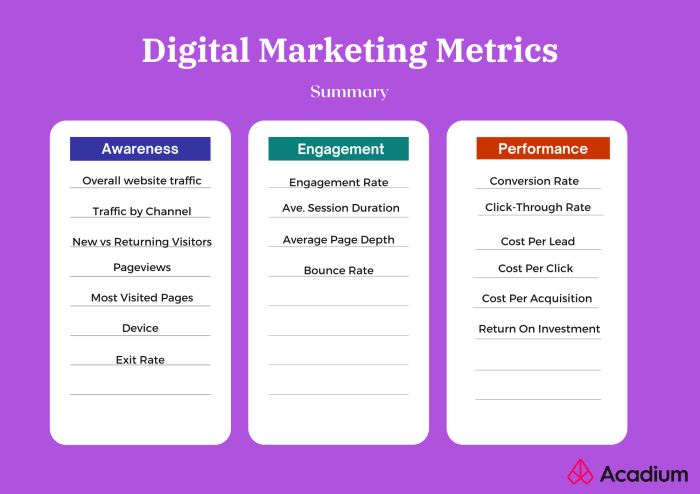
Understanding key website metrics like conversion rates and bounce rates is crucial, but equally important is using this data to actively improve your website’s performance. Low conversion rates indicate a problem in the user journey, while high bounce rates suggest issues with initial engagement. By analyzing these metrics and others, we can identify areas for improvement and implement targeted strategies. This section details how to translate data into actionable steps.
Identifying Areas for Improvement Based on Low Conversion Rates and High Bounce Rates
Low conversion rates often point to problems within the sales funnel. High bounce rates, on the other hand, suggest problems with the initial user experience. Analyzing website analytics will reveal specific pages or sections causing these issues. For example, a high bounce rate on a product page might indicate poor product descriptions or confusing navigation. A low conversion rate on a checkout page might signal a cumbersome checkout process or lack of trust signals. Understanding *where* these problems occur is the first step towards fixing them. Further investigation into user behavior on these pages, using tools like heatmaps and session recordings, can provide even more granular insights.
Strategies for Optimizing Website Content to Improve User Engagement
Improving user engagement involves making your website more appealing and easier to use. This includes optimizing content for readability, ensuring clear calls to action, and creating a visually appealing design. For example, breaking up large blocks of text with headings, subheadings, bullet points, and images improves readability and reduces bounce rates. Strategically placed calls to action (CTAs) guide users towards desired conversions. A/B testing different versions of CTAs can help determine which performs best. Furthermore, ensuring your website is mobile-friendly and loads quickly is critical for user experience and search engine optimization (). A slow-loading website can significantly increase bounce rates.
Utilizing A/B Testing to Improve Website Performance Based on User Behavior
A/B testing allows you to compare two versions of a webpage or element to see which performs better. This could involve testing different headlines, images, CTAs, or even the overall layout of a page. For instance, you could test two different versions of a landing page: one with a prominent image and a concise headline, and another with a more text-heavy approach. By tracking key metrics like conversion rates and bounce rates for each version, you can determine which performs better and iterate based on the results. A/B testing provides a data-driven approach to optimization, allowing for continuous improvement based on real user behavior. Tools like Google Optimize make A/B testing relatively straightforward to implement.
Step-by-Step Guide for Implementing Changes to Improve Key Metrics
Implementing changes based on your analytics requires a structured approach. Here’s a step-by-step guide:
- Analyze Your Data: Thoroughly review your website analytics to identify pages with low conversion rates and high bounce rates. Pay close attention to user behavior on these pages.
- Formulate Hypotheses: Based on your analysis, develop hypotheses about why these issues are occurring. For example, a high bounce rate on a product page might be due to unclear product descriptions.
- Develop and Implement Changes: Based on your hypotheses, make specific changes to your website. This might involve rewriting product descriptions, improving navigation, or optimizing images.
- Monitor Results: Track your key metrics after implementing changes to see if they have had a positive impact. Use A/B testing to compare different versions of changes.
- Iterate and Refine: Based on your results, continue to iterate and refine your changes. A/B testing allows you to continuously improve your website’s performance.
Final Summary
Optimizing your website analytics is an ongoing process of learning, adapting, and refining your strategies based on data. By consistently monitoring the four key metrics—traffic, bounce rate, session duration, and conversion rate—and implementing the strategies Artikeld in this guide, you can create a more engaging and effective online experience for your users. This will lead to improved user engagement, higher conversion rates, and ultimately, the achievement of your business goals. Remember, data-driven decision-making is the key to unlocking your website’s full potential.