Mastering clear and concise writing is crucial for effective communication. This guide explores five key techniques to elevate your prose, transforming verbose sentences into impactful statements. We’ll delve into sentence structure, word choice, and editing strategies, providing practical examples and exercises to enhance your writing skills. Prepare to unlock the power of precise language and captivate your audience with clarity.
From understanding the nuances of active and passive voice to mastering the art of eliminating unnecessary words, we’ll equip you with the tools to refine your writing process. We’ll also examine the role of strong verbs, precise nouns, and varied sentence structures in creating engaging and impactful content.
Understanding Clarity and Conciseness
Clarity and conciseness are fundamental to effective writing. Clear writing ensures your message is easily understood by your audience, while concise writing delivers that message efficiently, avoiding unnecessary words or phrases. Mastering both is crucial for impactful communication, whether you’re crafting a business report, a persuasive essay, or a simple email. This section will explore practical techniques to enhance both aspects of your writing.
Effective communication hinges on the ability to express complex ideas in a straightforward and easily digestible manner. Unclear writing often leads to misinterpretations, while verbose writing can bore or confuse the reader. By focusing on clarity and conciseness, you can ensure your writing is both impactful and engaging.
Examples of Unclear Sentences and Their Revisions
Here are five examples of unclear sentences and their revised, clearer versions. Note how the revisions improve sentence structure and word choice for better understanding.
- Unclear: The project, which was initially slated for completion by the end of the quarter, experienced several unforeseen delays resulting in a significant pushback of the timeline.
- Clear: The project was delayed beyond the end of the quarter due to unforeseen problems.
- Unclear: Due to the fact that the weather was inclement, the game was postponed.
- Clear: The game was postponed because of bad weather.
- Unclear: It is important to note that the aforementioned findings are subject to further analysis and review before any definitive conclusions can be drawn.
- Clear: These findings require further analysis before we reach conclusions.
- Unclear: In the event that you are unable to attend the meeting, please notify us in advance.
- Clear: If you can’t attend the meeting, please let us know beforehand.
- Unclear: Considering the totality of the circumstances surrounding the incident, it is apparent that a thorough investigation is warranted.
- Clear: The incident requires a thorough investigation.
Techniques for Eliminating Unnecessary Words
Several techniques can help streamline your writing and eliminate unnecessary words, resulting in greater conciseness.
- Remove Redundancies: Identify and eliminate words or phrases that repeat the same idea. For example, “past history” is redundant; simply use “history.”
- Replace Wordy Phrases: Substitute longer phrases with shorter, more impactful alternatives. Instead of “in the event that,” use “if.” Instead of “due to the fact that,” use “because.”
- Cut Empty Words: Eliminate words that don’t add meaning to the sentence, such as “very,” “really,” or “actually,” unless they add specific emphasis.
Comparison of Concise and Verbose Writing Styles
The following table illustrates the difference between concise and verbose writing styles, highlighting how concise writing improves clarity and impact.
| Sentence | Verbose Version | Concise Version | Explanation of Improvement |
|---|---|---|---|
| Introducing a new product | At this juncture, we would like to bring to your attention the introduction of a groundbreaking new product that we are quite excited about and believe will revolutionize the market. | We are excited to introduce a groundbreaking new product. | Removed unnecessary phrases (“At this juncture,” “we would like to bring to your attention,” “that we are quite excited about,” “and believe will revolutionize the market”) to focus on the core message. |
| Describing a meeting | The meeting, which was held on the 15th of October, commenced at 10:00 AM and concluded at approximately 12:00 PM. Several important topics were discussed during the course of the meeting. | The October 15th meeting lasted from 10:00 AM to 12:00 PM and covered several important topics. | Combined sentences, replaced wordy phrases (“commenced,” “concluded at approximately,” “during the course of”), and used more precise language. |
| Expressing an opinion | In my humble opinion, I believe that the aforementioned proposal is not only feasible but also represents a viable and effective solution to the problem at hand. | The proposal is feasible and effective. | Removed unnecessary qualifiers (“In my humble opinion,” “I believe that,” “the aforementioned,” “not only…but also,” “the problem at hand”) and used stronger verbs. |
| Stating a fact | It is a well-known and widely accepted fact that the Earth revolves around the Sun. | The Earth revolves around the Sun. | Removed unnecessary phrases (“It is a well-known and widely accepted fact that”). |
Impact of Sentence Structure on Clarity and Conciseness
Sentence structure significantly impacts both clarity and conciseness. Short, simple sentences are generally easier to understand than long, complex ones. However, a series of short, choppy sentences can also be jarring and less engaging. The ideal approach involves a balance: using a variety of sentence lengths and structures to maintain reader interest while ensuring clarity. Varying sentence structure can also enhance the rhythm and flow of your writing. Avoid overly long sentences with multiple clauses; break them down into shorter, more manageable units for improved readability. Using active voice generally leads to more concise and direct writing compared to passive voice.
Mastering Sentence Structure and Word Choice
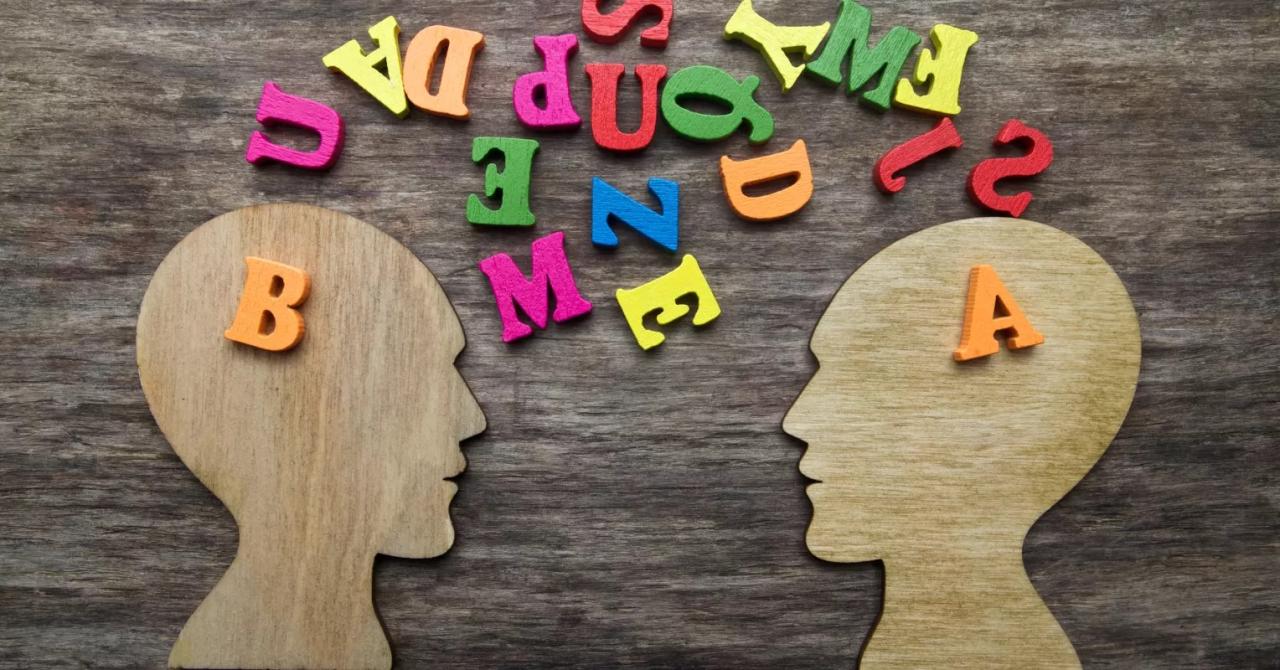
Effective communication relies heavily on crafting well-structured sentences and choosing the right words. This section explores techniques to enhance clarity and conciseness through careful attention to sentence structure and vocabulary. Mastering these elements will significantly elevate the quality of your writing.
Active and Passive Voice
The distinction between active and passive voice lies in the subject’s role within the sentence. In active voice, the subject performs the action (e.g., “The dog chased the ball”). In passive voice, the subject receives the action (e.g., “The ball was chased by the dog”). While passive voice isn’t inherently wrong, overuse can lead to vagueness and weaken your writing. Active voice generally creates more direct and engaging prose. Use passive voice when the actor is unknown, unimportant, or needs to be de-emphasized, or when focusing on the action itself is more important than the actor. For example, “Mistakes were made” is preferable to pinpointing blame.
Common Grammatical Errors Affecting Clarity
Three common grammatical errors that frequently impede clarity are subject-verb agreement, pronoun ambiguity, and misplaced modifiers. Subject-verb agreement requires the verb to match the subject in number (singular or plural). For example, “The dog barks” is correct, while “The dog bark” is incorrect. Pronoun ambiguity arises when it’s unclear which noun a pronoun refers to. For example, in “John told Michael he was wrong,” it’s unclear who “he” refers to. Misplaced modifiers occur when a descriptive phrase is not placed correctly, leading to awkward or nonsensical sentences. For example, “Running down the street, the red car was speeding” implies the car was running. Correcting these errors requires careful attention to sentence structure and the careful placement of words and phrases.
Effective Use of Strong Verbs and Precise Nouns
The impact of your writing is greatly enhanced by using strong verbs and precise nouns. Consider this paragraph: “The feline swiftly moved across the floor covering. It made a quick sound.” This is weak. Now compare it to: “The cat darted across the carpet, emitting a sharp hiss.” The revised paragraph uses stronger verbs (“darted,” “emitting”) and more precise nouns (“cat,” “carpet,” “hiss”), creating a far more vivid and impactful image. Strong verbs add energy and precision, while specific nouns avoid vagueness and ambiguity.
Varied Sentence Structure
Employing a variety of sentence structures—simple, compound, complex, and compound-complex—prevents monotony and maintains reader engagement. Repetitive sentence structures, especially short, simple sentences, can make your writing feel choppy and unpolished. Mixing sentence lengths and types creates a more natural rhythm and flow, improving readability and overall impact. For instance, alternating short, declarative sentences with longer, more complex ones can create emphasis and variety. This allows you to control pacing and create a dynamic reading experience.
Refining Your Editing Process
Effective editing is crucial for achieving clarity and conciseness in your writing. It’s not simply about catching typos; it’s a systematic process of refining your work to ensure it’s easily understood and free of unnecessary words or phrases. This involves multiple passes through your text, each with a specific focus.
A well-defined editing process significantly improves the quality of your writing. By following a structured approach, you can identify and correct inconsistencies, strengthen your arguments, and ultimately produce more impactful prose. This section details a step-by-step process, a helpful checklist, and guidance on utilizing proofreading tools.
A Step-by-Step Editing Process
The most effective editing process involves multiple stages, allowing you to focus on different aspects of your writing at each step. A typical approach might involve these steps:
- Big-Picture Review: Begin by reviewing the overall structure and argument. Does the piece flow logically? Are the main points clear and well-supported? This stage focuses on the overall coherence and effectiveness of your writing.
- Clarity Pass: Read through your text, focusing solely on clarity. Are there any sentences that are difficult to understand? Are there any ambiguous words or phrases? Replace jargon with simpler language where appropriate. This pass aims to ensure your ideas are easily grasped.
- Conciseness Pass: Next, eliminate unnecessary words and phrases. Look for redundancies, clichés, and weak verbs. Consider replacing longer sentences with shorter, more impactful ones. This stage focuses on streamlining your writing.
- Style and Tone Review: Check for consistency in style and tone. Does the writing maintain a consistent voice throughout? Is the tone appropriate for your intended audience? This pass ensures your writing is polished and professional.
- Proofreading: Finally, meticulously proofread your work for grammatical errors, spelling mistakes, and punctuation issues. Use a proofreading tool to assist with this stage.
An Editing Checklist
Using a checklist during the editing process helps ensure you don’t miss any crucial steps. This checklist focuses on clarity and conciseness:
- Clarity:
- Are all sentences easily understandable?
- Have I avoided jargon and technical terms where possible?
- Are all pronouns clearly linked to their antecedents?
- Is the overall meaning and argument clear?
- Conciseness:
- Have I eliminated unnecessary words and phrases?
- Are there any redundancies or clichés?
- Have I used strong verbs and avoided weak ones?
- Are my sentences concise and to the point?
Effective Use of Proofreading Tools
Proofreading tools such as Grammarly or ProWritingAid can significantly enhance your editing process. These tools can identify grammatical errors, spelling mistakes, and stylistic inconsistencies. However, it’s important to remember that these tools are not a replacement for careful human editing. They should be used as aids, not as definitive authorities.
For example, a proofreading tool might flag a sentence as grammatically incorrect, but the issue might be a stylistic choice rather than a genuine error. Always review the suggestions provided by the tool and use your own judgment to determine whether to accept or reject them.
Comparing Editing Techniques
Different editing techniques can be employed to enhance clarity and conciseness. For instance, the “cut and paste” method involves identifying and removing unnecessary phrases or sentences. The “sentence combining” technique involves merging short, choppy sentences into longer, more flowing ones. Conversely, the “sentence splitting” method breaks down overly long and complex sentences into shorter, more manageable units. Each technique serves a specific purpose and is best employed depending on the specific needs of the text.
The choice of technique depends on the specific issues in your writing. If your writing is overly wordy, the “cut and paste” method might be most effective. If your sentences are short and choppy, sentence combining is a better approach. If your sentences are overly long and complex, sentence splitting can improve readability.
Last Point
By implementing these five techniques – focusing on clarity, conciseness, sentence structure, word choice, and a robust editing process – you can significantly improve the effectiveness of your writing. Remember, clear and concise writing isn’t just about brevity; it’s about impactful communication. Embrace the power of precise language and watch your writing resonate with readers.